We start a weekend of views of the unique fresh water spring near Manistique, Michigan called Kitch-iti-ki-pi. It is located in the Upper Peninsula of Michigan.

This view shows the old raft launch viewing area and the raft slowly moving away in the distance as the passengers view the bottom of the spring. The water flows so fast and clear that it is possible to see the bottom quite easily, and among other views are constantly shifting sands that form shapes for interpretation much like clouds.
The description states:
KITCH-ITI-KI-PI SPRING
Near Manistique, Michigan
In a land of intensely cold winters the crystal-clear waters of the “Big Spring” never freeze over. Legend has it that an Indian maiden, spurning the attentions of an unwanted suitor, fell into the spring and was changed by the magic properties of the water into a white deer.
–As can be seen by the mechanical postmarking in the sky area of the card, the postcard was used and is dated 19 July 1956.
Author: desteede
1917 Stutz Bearcat
This is an image of the legendary Stutz Bearcat, a model built, with interruptions, from 1911 until 1934. This example appears to be from 1917, based on the step-over sides, the external gearing, and the right hand drive.

The name was considered so valuable and iconic that it was reused in other completely different designs and by other manufacturers several times over later decades. It became a car that other sporty roadsters were compared to even into the 1950s and 1960s.
This image is on a card used as a marketing promotion for the Gezon Motor Sales Company of Grand Rapids, Michigan, to remind customers to have their current cars serviced. This card was used, and is dated 3 January 1957.
1913 Mercer Raceabout
This sporty model is from the Mercer Car Company. It had some high powered executives, including members of the Roebling family, famous for the construction of the Brooklyn Bridge.

The description states this model was built with a 30hp engine, while other sources indicate it was 55hp. The car was built as right hand drive with the windshield mounted in a frame on the steering wheel. The car was a very successful racer in its early years, even considering the gas tank was immediately behind the seat backs. The company was closed in 1925.
The postcard itself was used as a marketing reminder by the Gezon Motor Sales in 1957.
1912 Brush Runabout
This brightly colored two seater was built by the Brush Motor Car Company in 1912. They built these runabouts exclusively, and this one sported a 10 horsepower engine. In 1910, Brush and several other small manufacturers merged into the short-lived United States Motor Company. This company failed in 1913.

This card, like the others in this series, was a marketing tool for encouraging customers to bring their cars in for regular service, in this case every 1000 miles. The company credited below the photo, Gezon Motor Sales, is still in business in Grand Rapids, MI today.
The card is postmarked 1957.
1910 Stearns Automobile
This dazzling example of early motor car manufacture was built by Stearns. This model is the 15-30, with a 30 horsepower engine. This firm was known for building luxury cars like the one pictured, and sports cars, most notably one driven by racing legend Barney Oldfield.

The company was in business from 1898 and was sold to the WillysOverland company in 1925, In 1929 the company was liquidated.
Among other marketing information on the back of this card is the phrase: Ask for Pennzoil with Z-7…the Long Quart.
—This is a reference to how long the oil lasts in your engine, a significant issue when service cycles were as short as 1000 miles.
This card was used and is from 1957.
1910 Metz Automobile
This week features classic automobiles from the earliest years of the 20th Century. This card highlights the 1910 model from the Metz car company featuring a 23 horsepower motor. The company had a short lifetime as a result of the inability of hand-made cars to compete with the assembly-line vehicles built by Ford in this era.

This card was not a souvenir but a reminder card sent by the Gezon Motor Sales company in Grand Rapids, Michigan, to remind customers to have their current car serviced. The description on the back states:
YOU SAVE MONEY
…by letting us inspect and service your car every 1000 miles. It runs smoother, safer and lasts longer! You save on gas, oil, repairs. That 1000 mile mark is important. May we see you then? Thanks for your most recent visit. Happy motoring!
–Service intervals have gradually increased since then, up to as long as 7500 miles today. Given that many cars are driven more than 1000 miles a month, it is likely that today a monthly service visit would feel very inconvenient.
This card was mailed to the recipient in 1957.
Pittsburgh, Pennsylvania
This week’s folio is images of various civic and commercial structures in Pittsburgh, Pennsylvania. Historically contentious because of competing claims between the French, English and colonists, this area was primarily a military base for much of its early years. A settlement grew in the fork of the river which became the city.
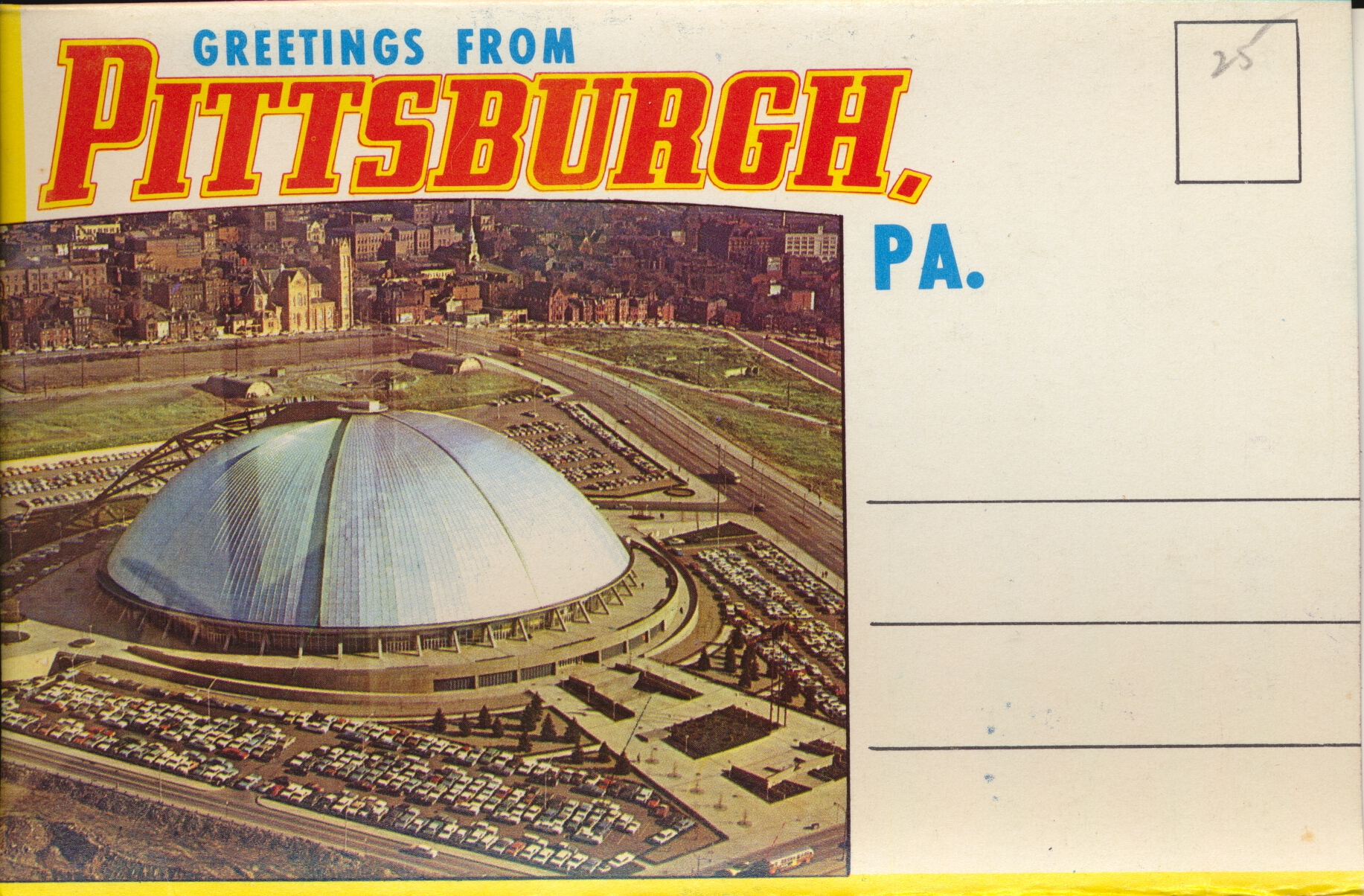
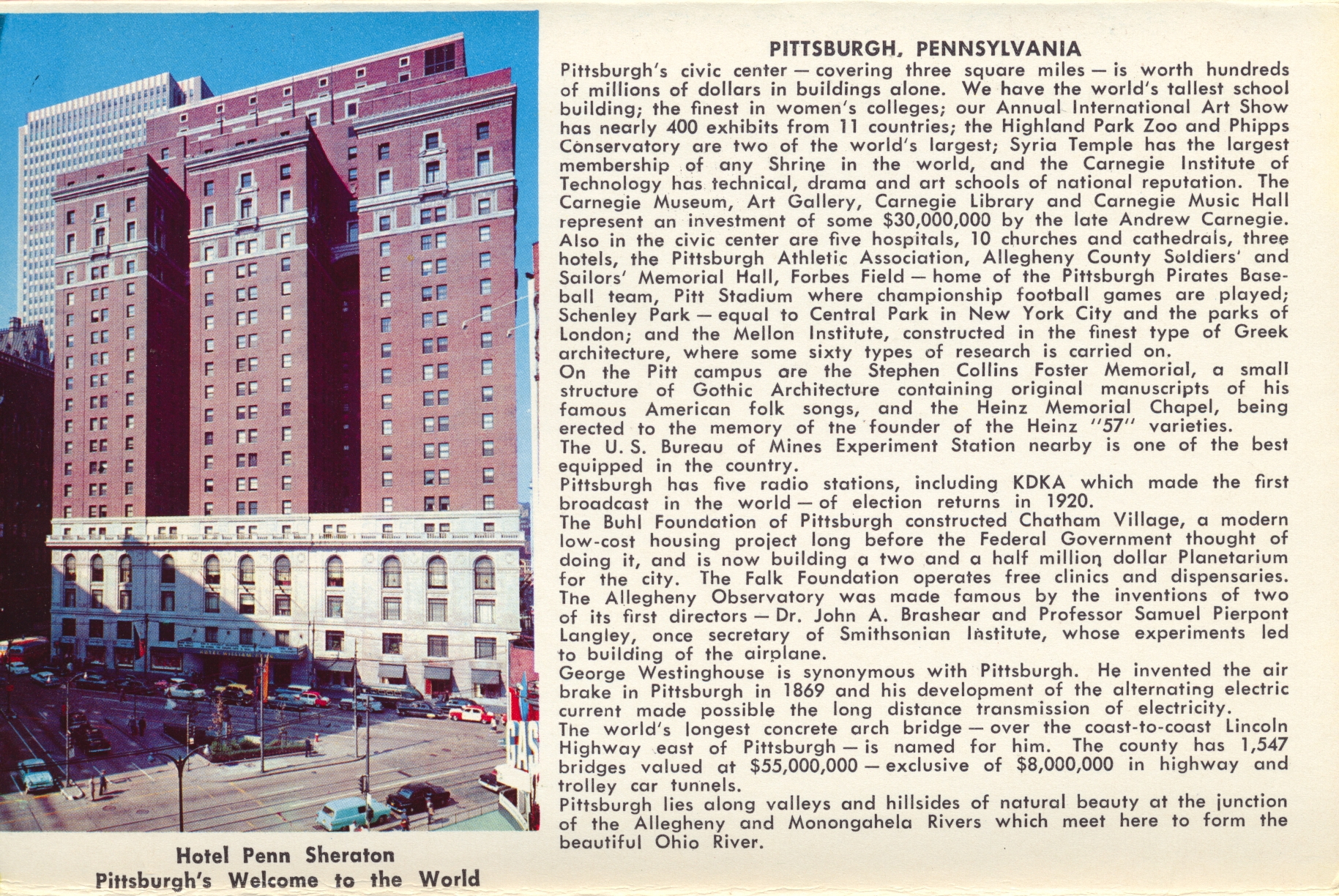
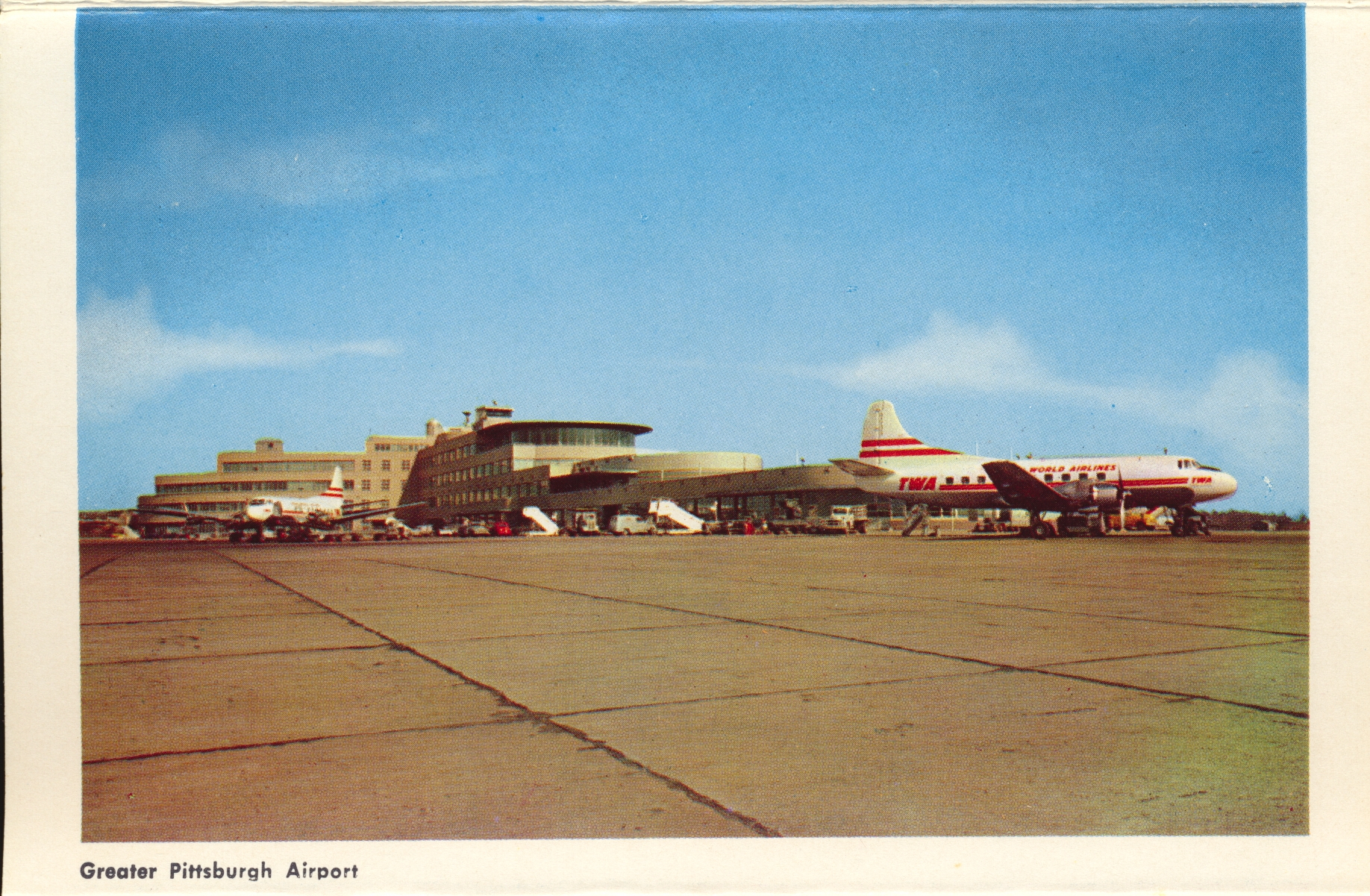
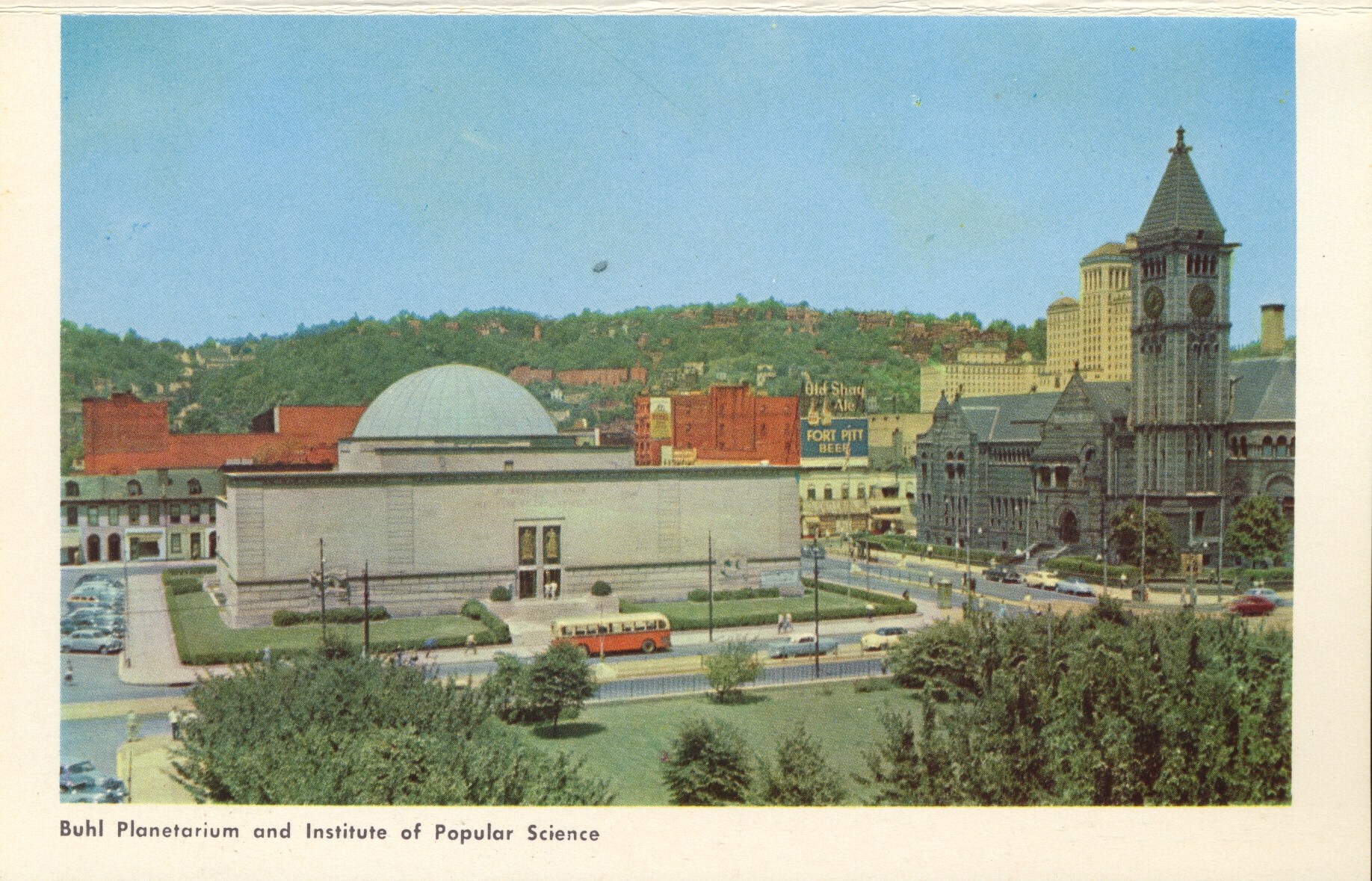
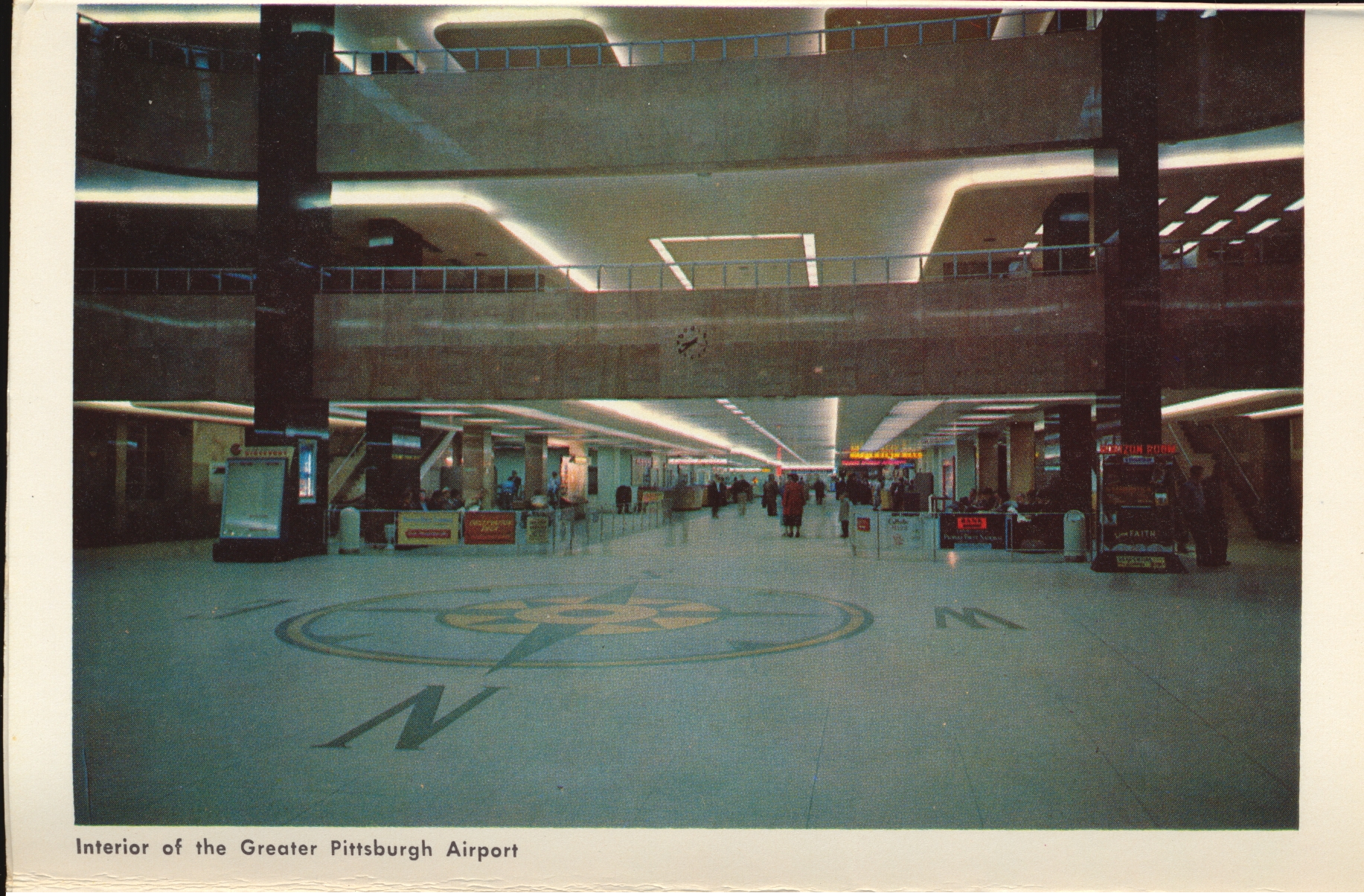
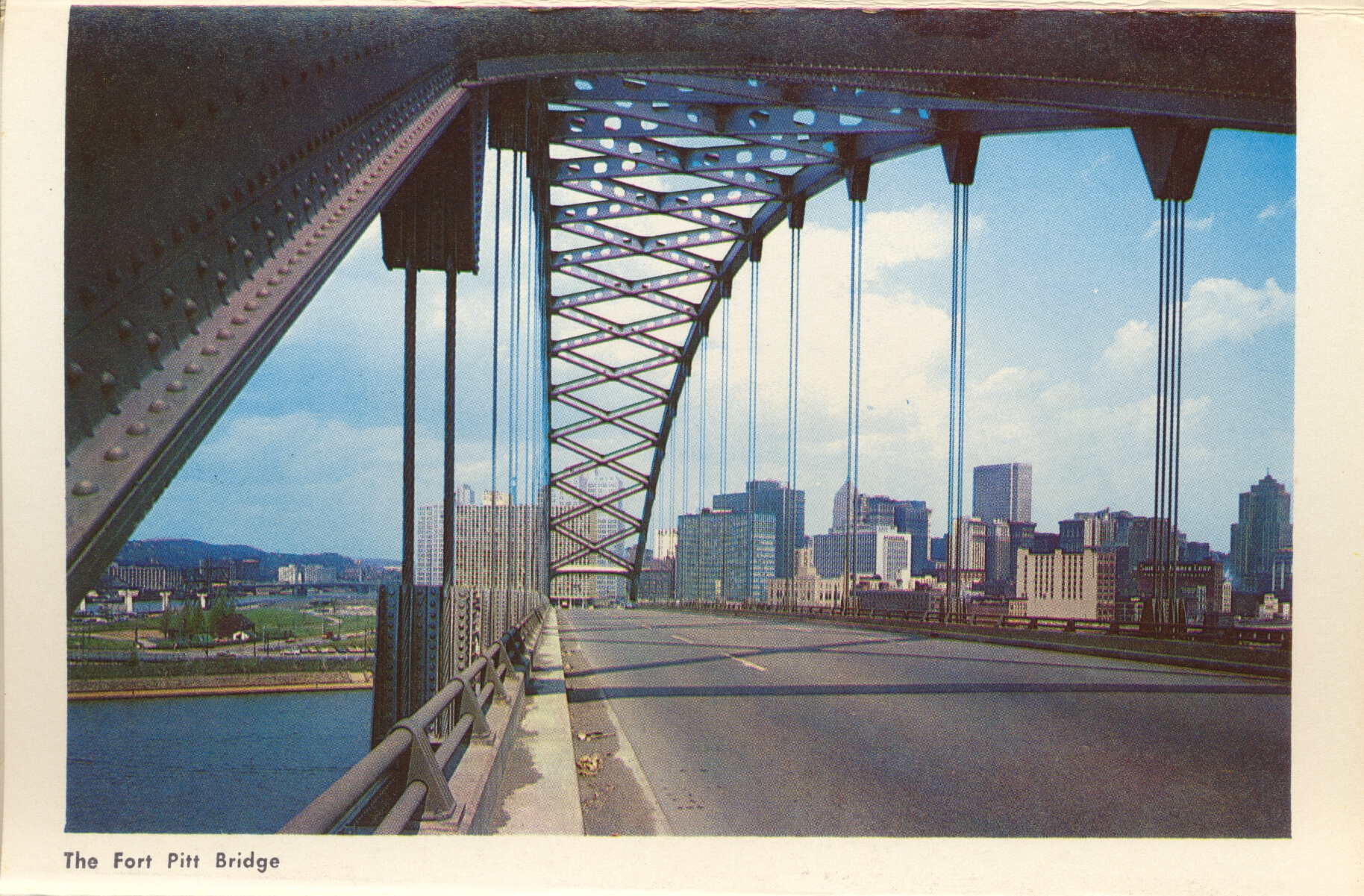
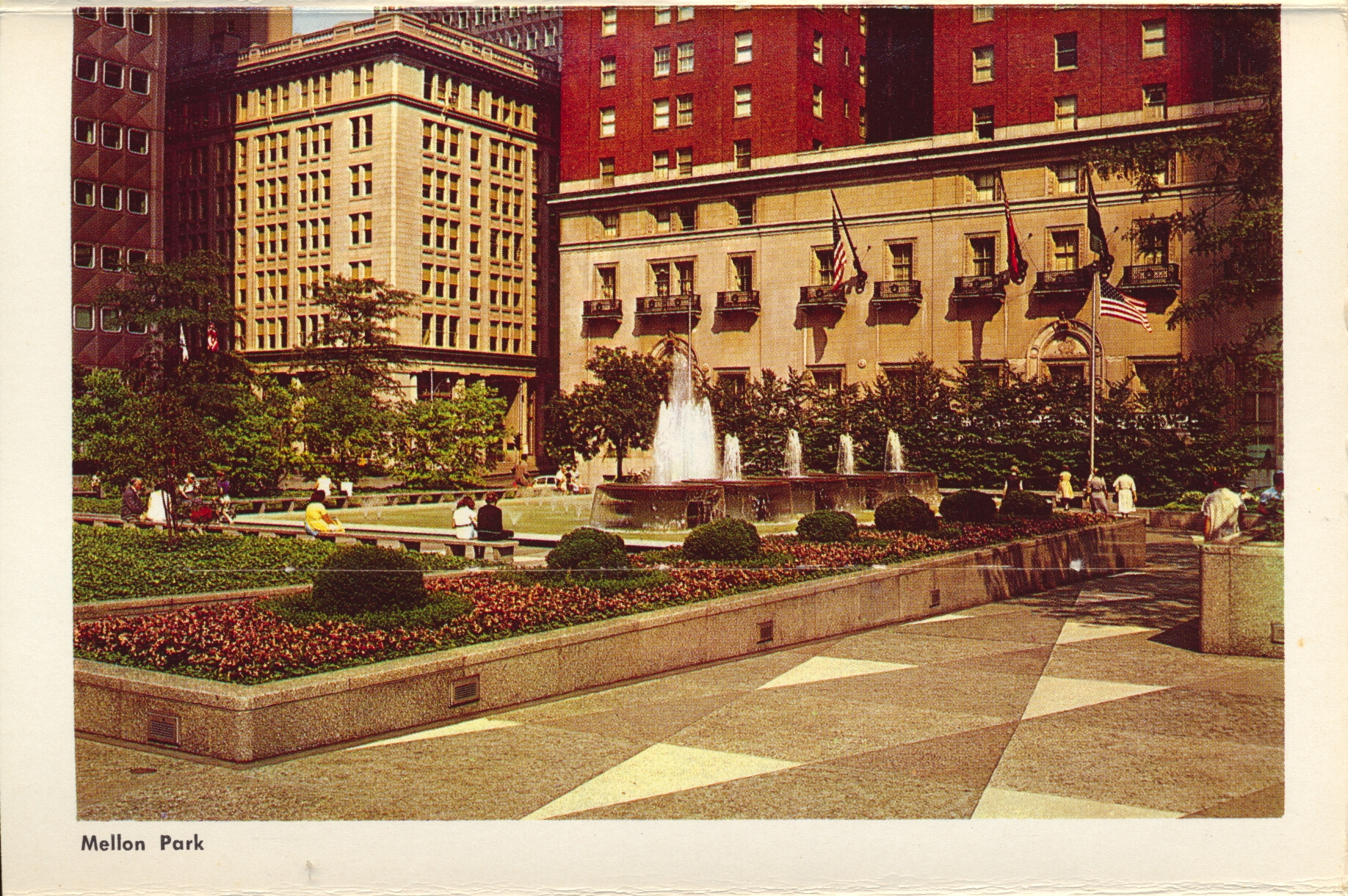
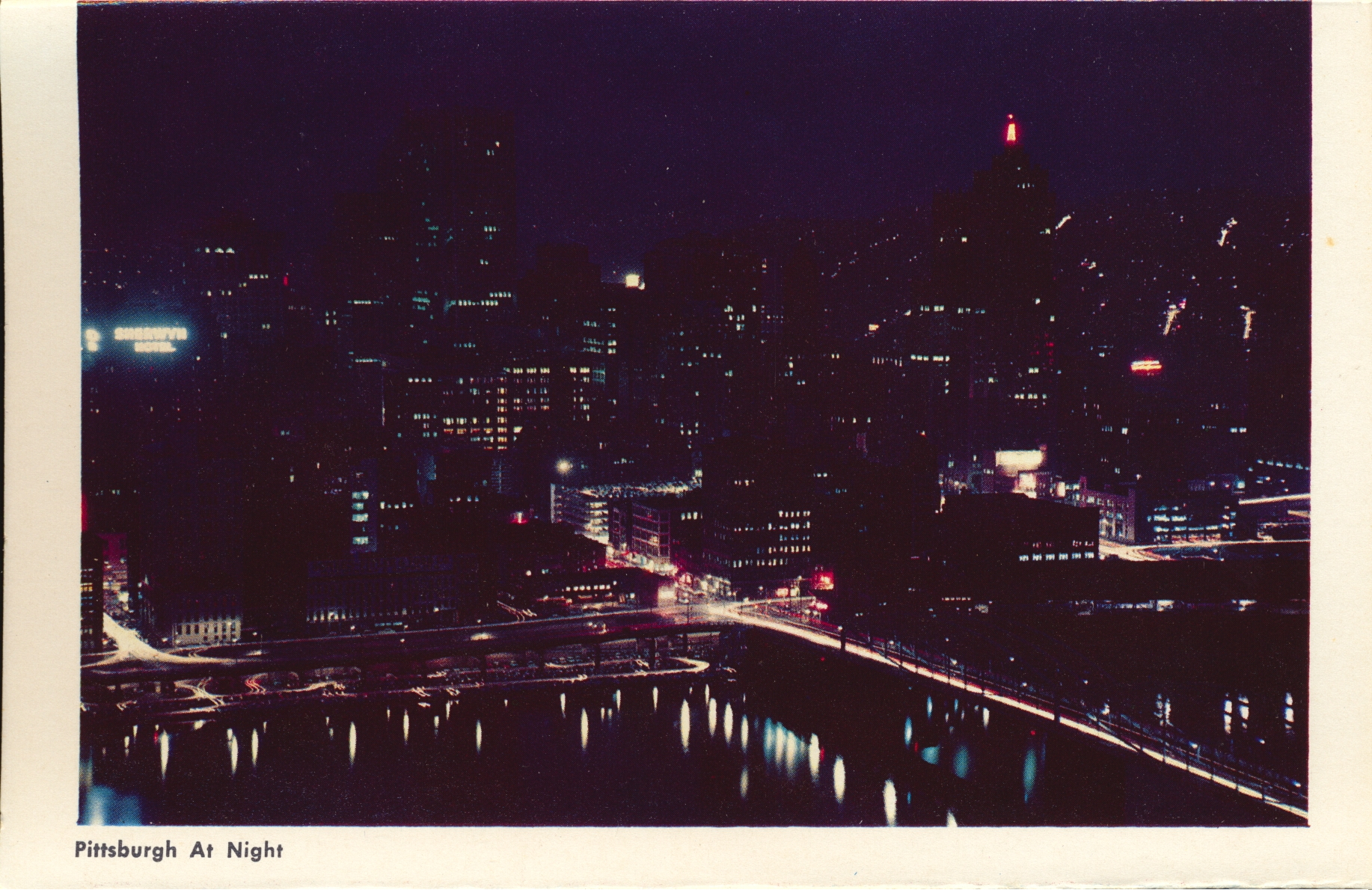
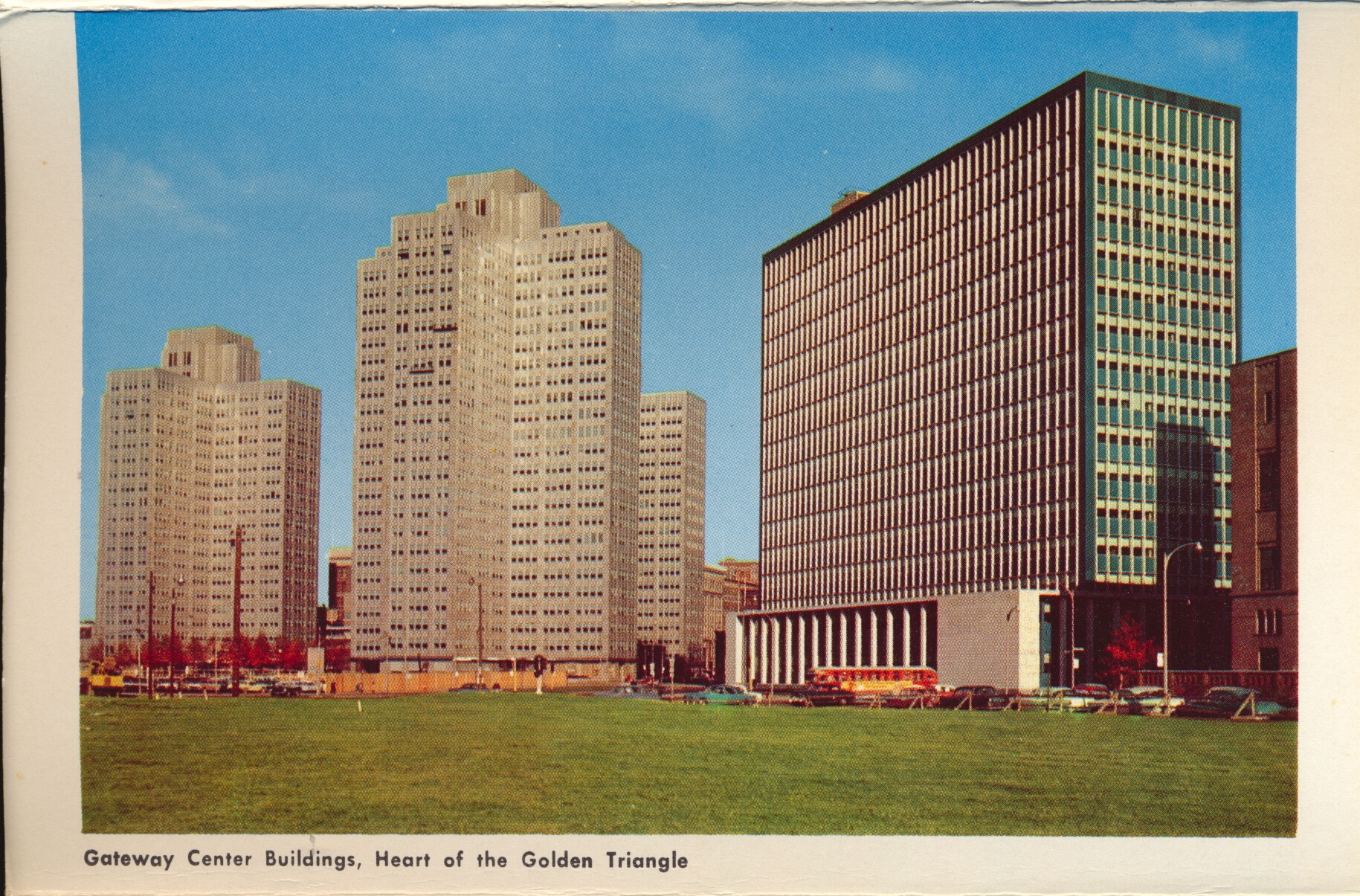
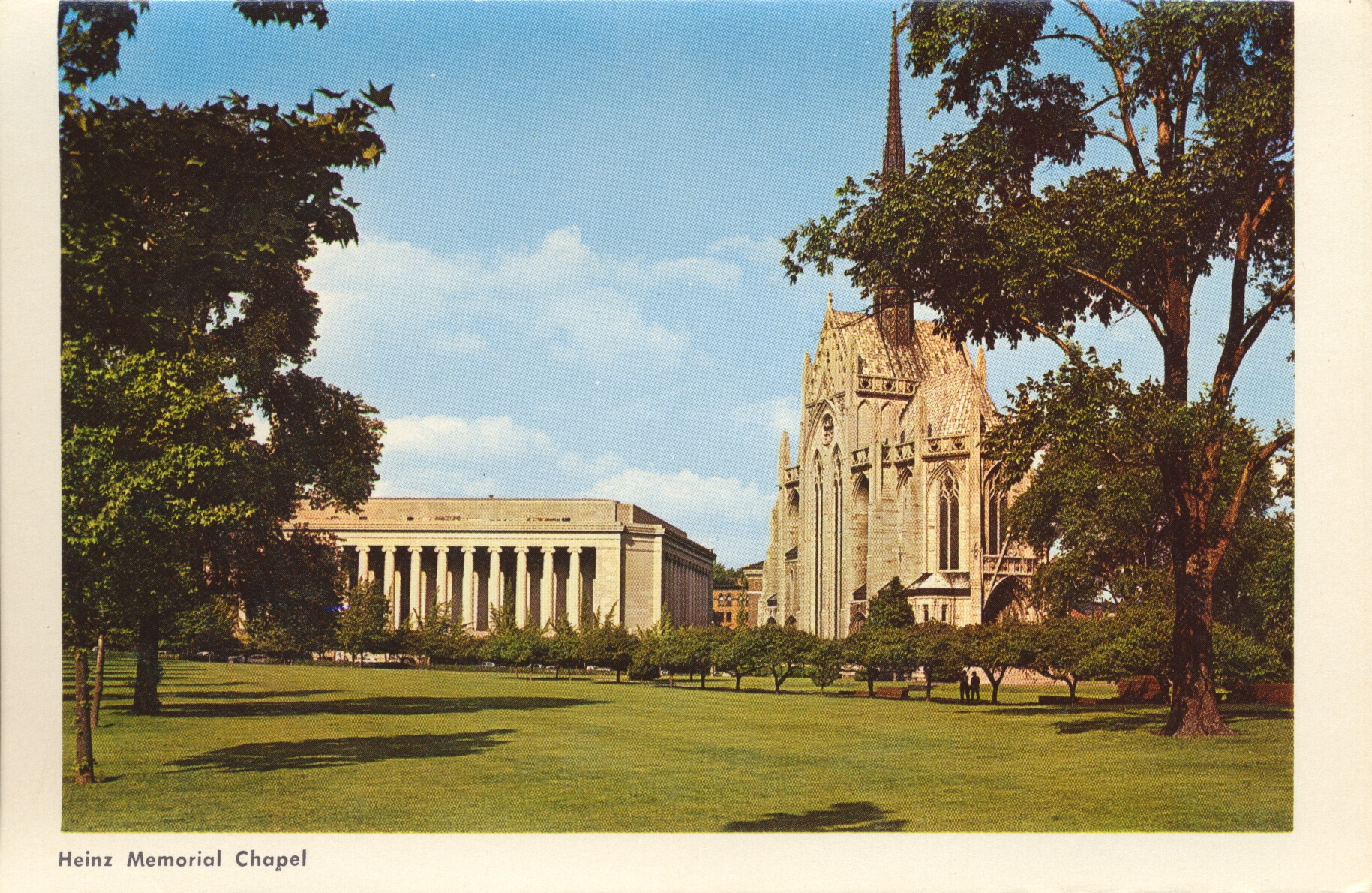
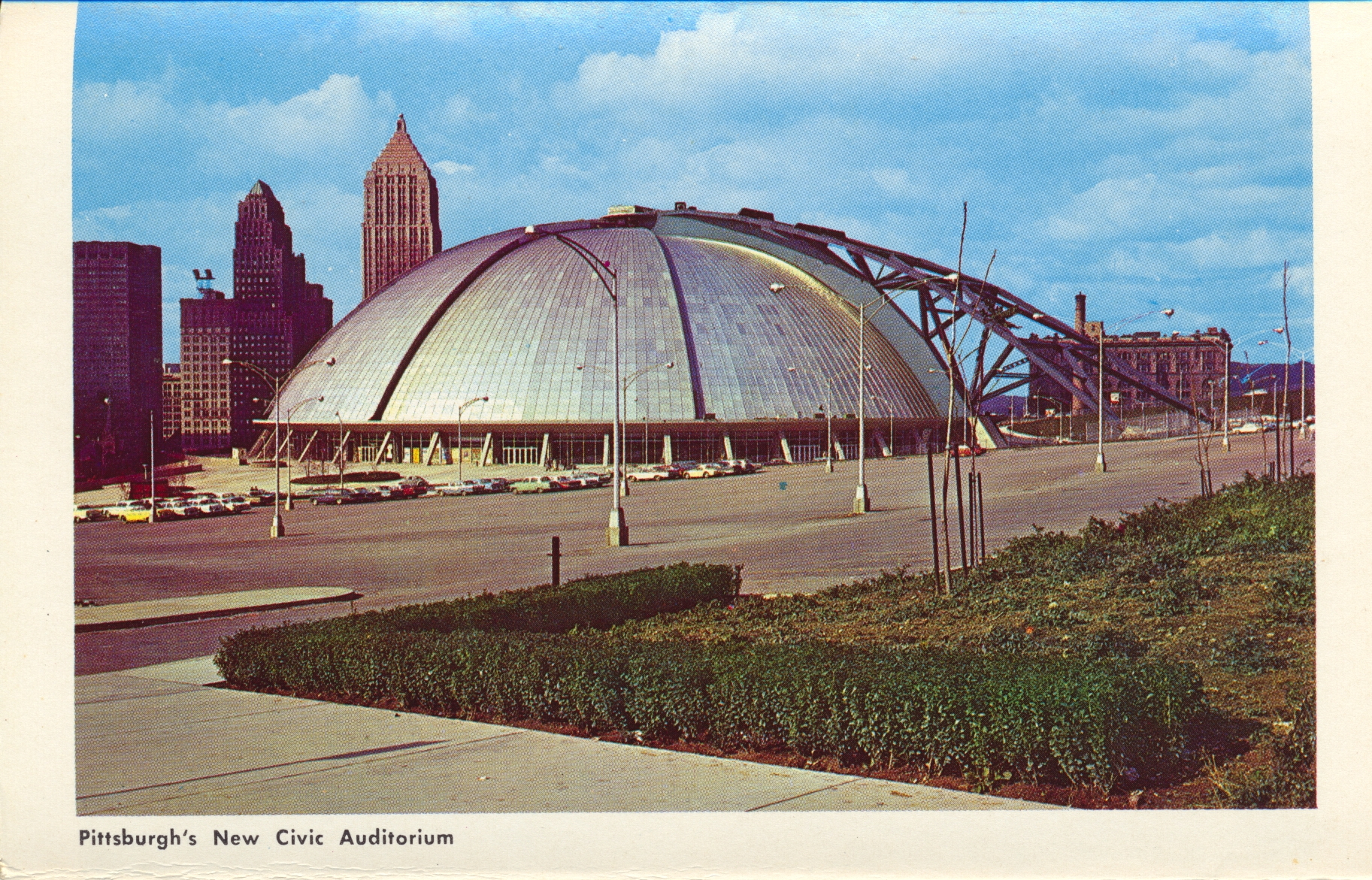


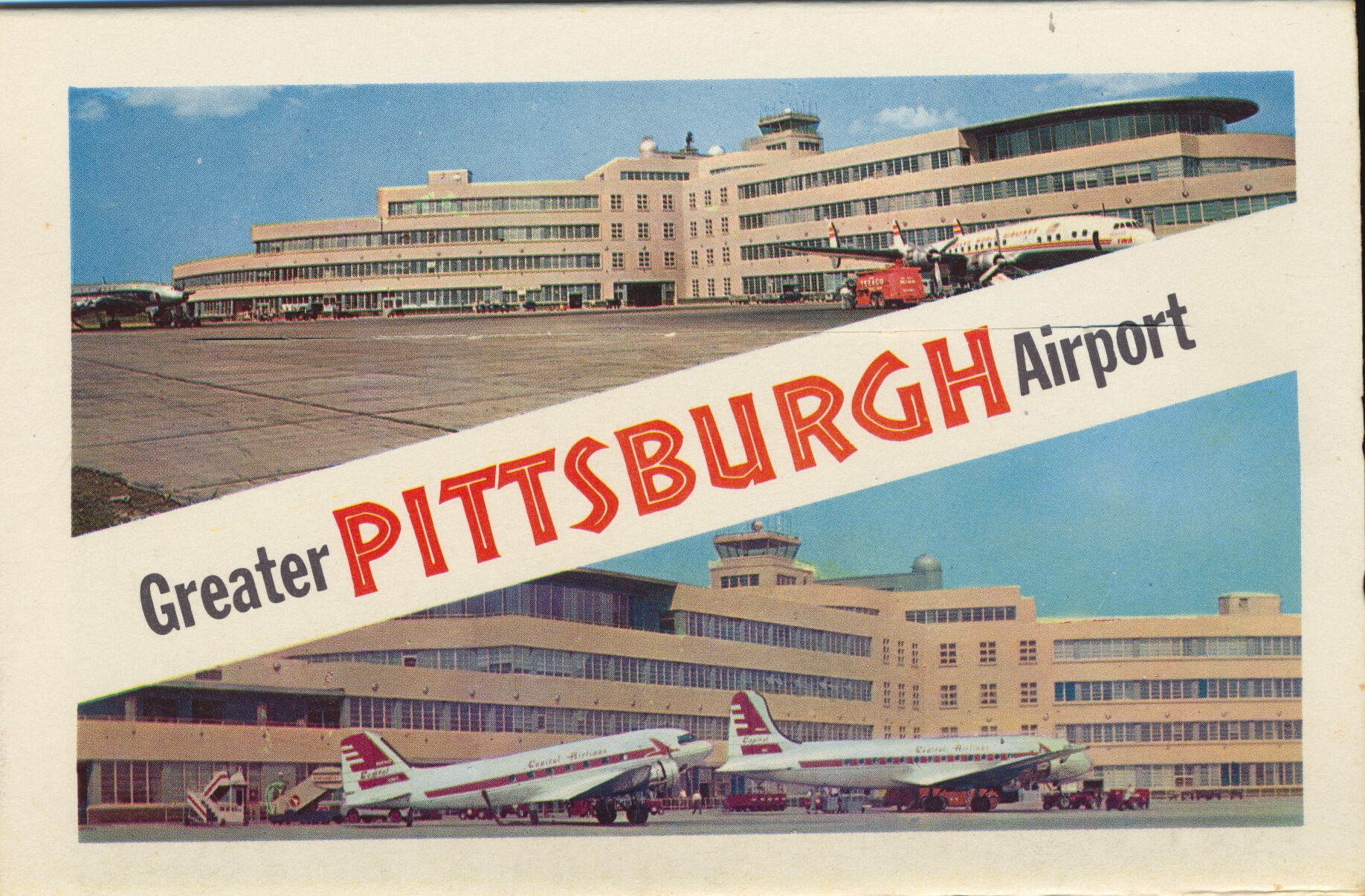
The indication on one of the photos that the Civic Auditorium is new points to this folio dating from the 1960s. That building, with its retractable roof, was demolished in 2012.
Bingo Hall, Golden Nugget Casino, Las Vegas, Nevada
From the ostentatious outside of the Golden Nugget to the more pedestrian inside, in this case the Bingo Hall. Bingo was a very popular gambling activity during this era, and it lives on as Keno, a more passive and less attention-intensive game. The wall-mounted number boards displayed below are typical of the Keno screens common in casinos today. The very formal and fixed layout of tables and stools reminds one of a set of long lunch counters from that time.

The description states:
BINGO ROOM
THE GOLDEN NUGGET
LAS VEGAS, NEVADA
The new palatial Bingo Room, in Nevada’s largest and most glamorous casino. The Golden Nugget, in Downtown Las Vegas, is the most modern and luxurious in the world. Every day thousands play this favorite game of chance.
–It is likely that, with the waning popularity of Bingo, its replacement with Keno, and the incredible surge in popularity of slot machine games, that this room has been converted to other uses in the intervening decades.
This postcard was used, and has a postmark of 27 July 1953.
Golden Nugget Casino, Las Vegas, Nevada
Back from a quick tour of the strip to the old center of Las Vegas entertainment and gaming, Fremont Street. This is the Golden Nugget, one of the longer lasting establishments, now a hotel as well as the largest casino on Fremont Street.

The description states:
THE MILLION DOLLAR
GOLDEN NUGGET GAMBLING HALL
SALOON AND RESTAURANT
LAS VEGAS, NEVADA
“Where Fortune Smiles”
See the Old-Style West in our modern world. A place of mahogany bars, crystal chandeliers, with the genuine hospitality and old-time gaiety of the barbary coast and the Virginia City of fifty years ago.
—Barbary Coast is a reference to the notorious district in San Francisco, home to bordellos, gambling halls, drug dens and other unsavory entertainments. Virginia City was a boom town in the Washoe basin near Reno, notable for its extensive silver mining activity and the emergence of Mark Twain there as a journalist in his younger years.
The card dates from the 1950s
Hotel Thunderbird Swimming Pool, Las Vegas, Nevada
This second view of the Thunderbird is from the private side of the hotel, where you can see guests swimming, tanning and lounging around the pool behind the main building.

The description states:
The swimming pool and center patio of the famous Hotel Thunderbird in las Vegas, Nevada, one of the many fine resort hotels that attract a large number of vacationists and travelers each year.
–It is interesting to note there are no visible indications of either drinks or ashtrays, which would have been present in abundance around a pool in this era. The hotel was upgraded over time and ultimately demolished and replaced with another hotel resort that went bankrupt before completion.
This card, like the others in this series, dates from the 1950s.