This image illustrates the elaborate and ornate decoration of the Utah State Capitol, in particular the Governor’s Reception Room. The only unexpected decoration visible is the white pillow in the center of the image resting on one of the blue armchairs. This postcard also shows the perforations and threads indicating some small bag of material was attached, but whether it was salt or another mineral is unknown. Other versions of this card exist that had no attached bag.

The description is quite detailed:
GOVERNOR’S RECEPTION ROOM, UTAH STATE CAPITOL, SALT LAKE CITY, UTAH
The Gold Room, which is southwest of the Capitol’s main hall, is the governor’s reception room, in which Presidents and royal visitors have been received. The room is the most elegantly furnished and equipped of any of like character anywhere. The tapestry, the window curtains as well as the wonderful rug on the floor, were all especially made for this room. The color scheme throughout was dictated by the architect of the building. The total cost of the furnishing in this room was over $65,000,000. The mural paining on the ceiling was done by a world-famous artist.
Rug made in Scotland.
Size 22 ft. x 48 ft. Weight 1,350 pounds.
Curtains made in Florence, Italy.
Draperies made in Belgium.
Chandeliers made of Utah gold and silver.
Mural painting by Louis Schettle.
Tapestry of French production.
Furniture inlaid with Utah gold.
Capitol cost $2,739,528.54
–This card was used and is dated June 1955, but is likely from the 1940s based on others in this series.
Tag: used
Salt Beds, Great Salt Lake, Utah
This image starts a two week visit to Utah, featuring several notable sites. First off is a long view of the salt beds at the edge of the Great Salt Lake, at a time when they were extensively mined for salt.
Most notable about this card is the perforation and thread along the right edge. This indicates that when first sold, the card had a small cloth bag of salt attached to the card. Like most such cards, the salt bag was detached and inspected or displayed. However, there are two cards with the bags still attached that will be displayed at the end of these two weeks.

The card description states:
Great Salt Lake, located 15 miles west of Salk Lake City, is the largest of its character in the world. The water is about 22% solids and one may float upon it surface without effort. Thousands of tone of salt, obtained by solar evaporation, are produced annually by the industries on its shores.
–Postage for these was an additional penny at the time, bringing the total postage from 2 cents to 3. Postcards like this one are now prohibited by the Postal Serivce, as the attached bags would foul or damage the address reading machines.
This postcard was used, and is dated July 1948
Green Mountains, Vermont Folio
The folio this time is of the Green Mountain area of Vermont, the small state in the northeast of the United States. While it is a neighbor to the original colonies that declared independence, Vermont is not among the original 13 which established the United States.
The Green Mountains are called the Berkshires in Massachusetts, and extend the length of the state from north to south.
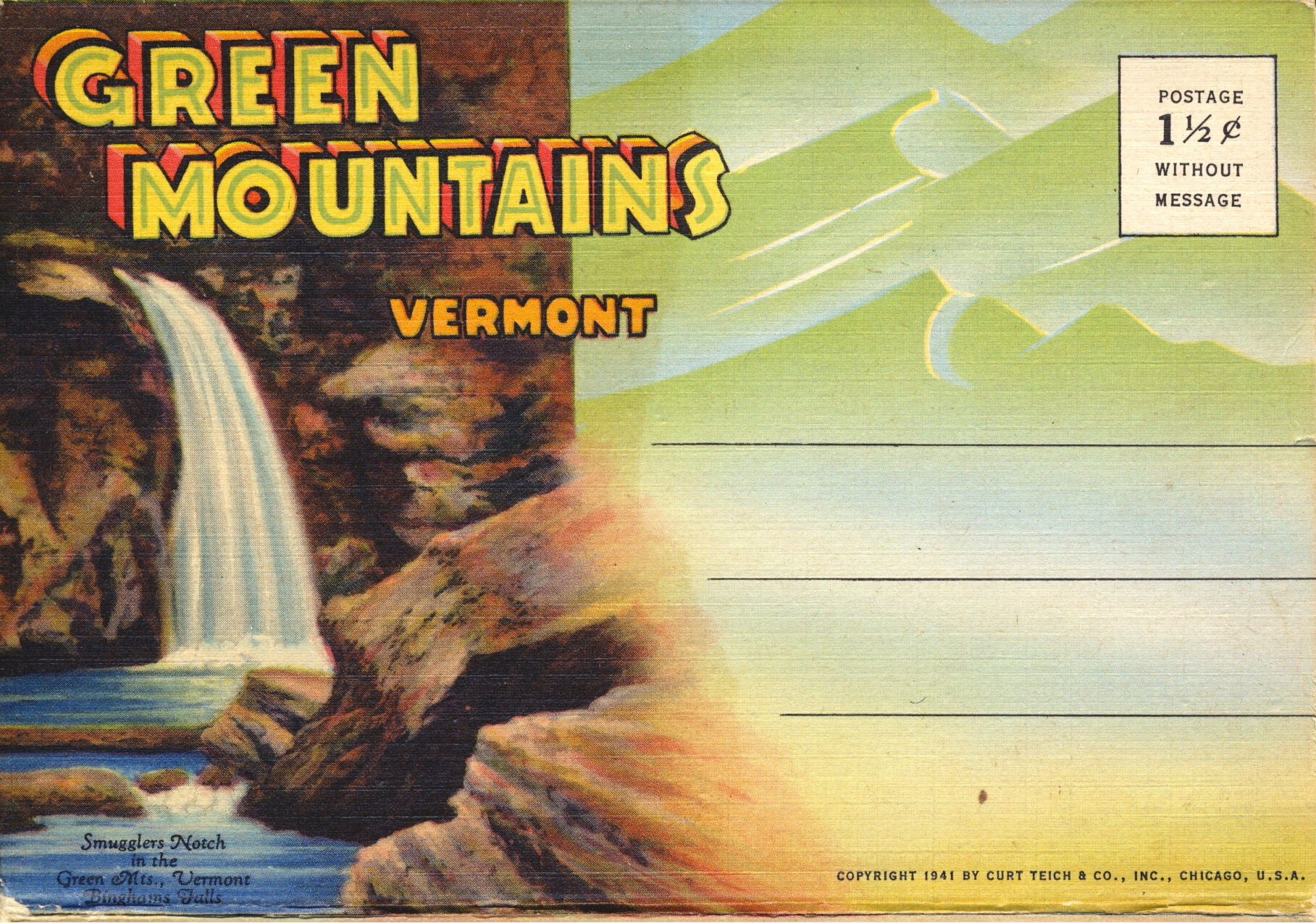
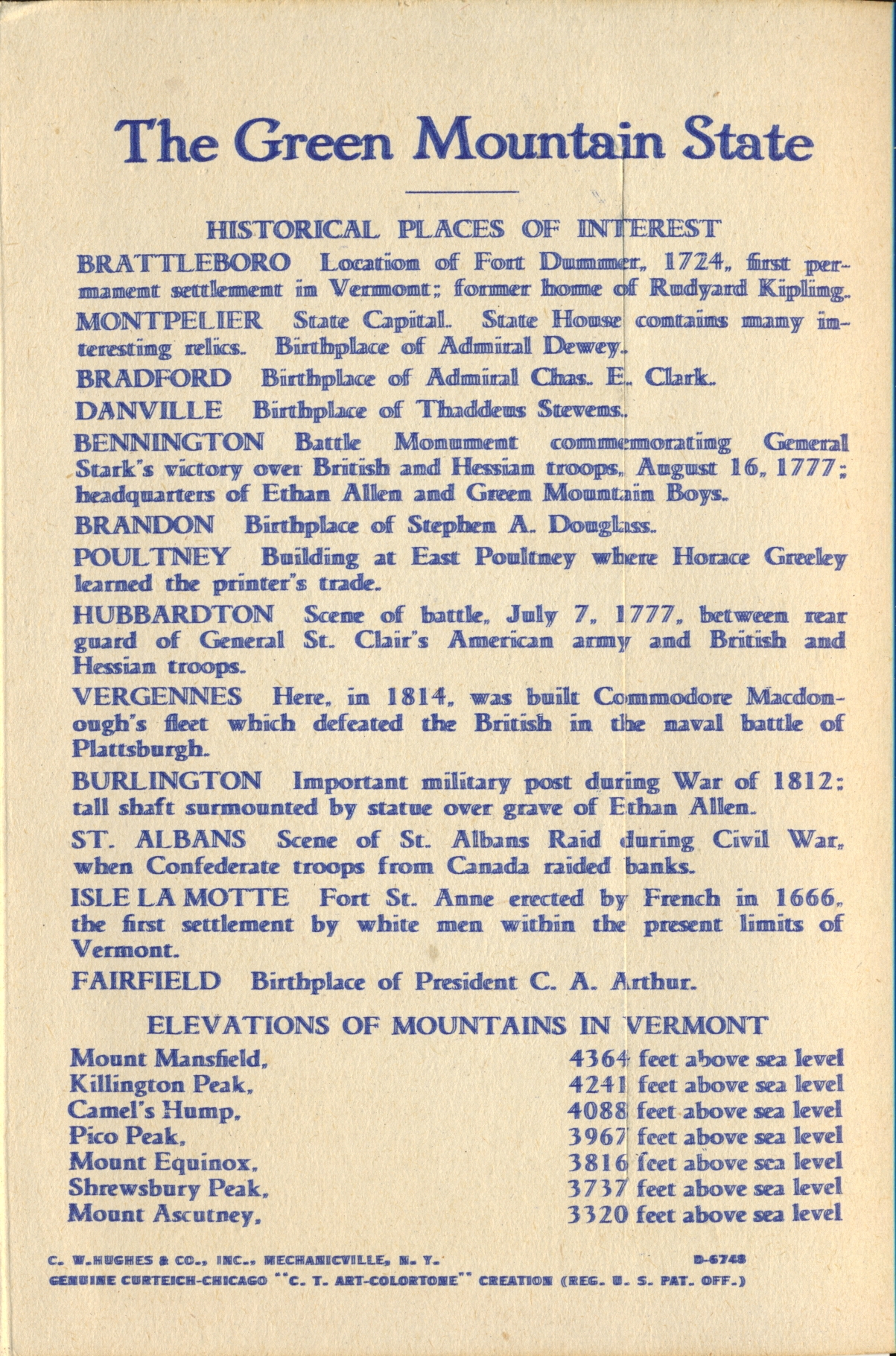
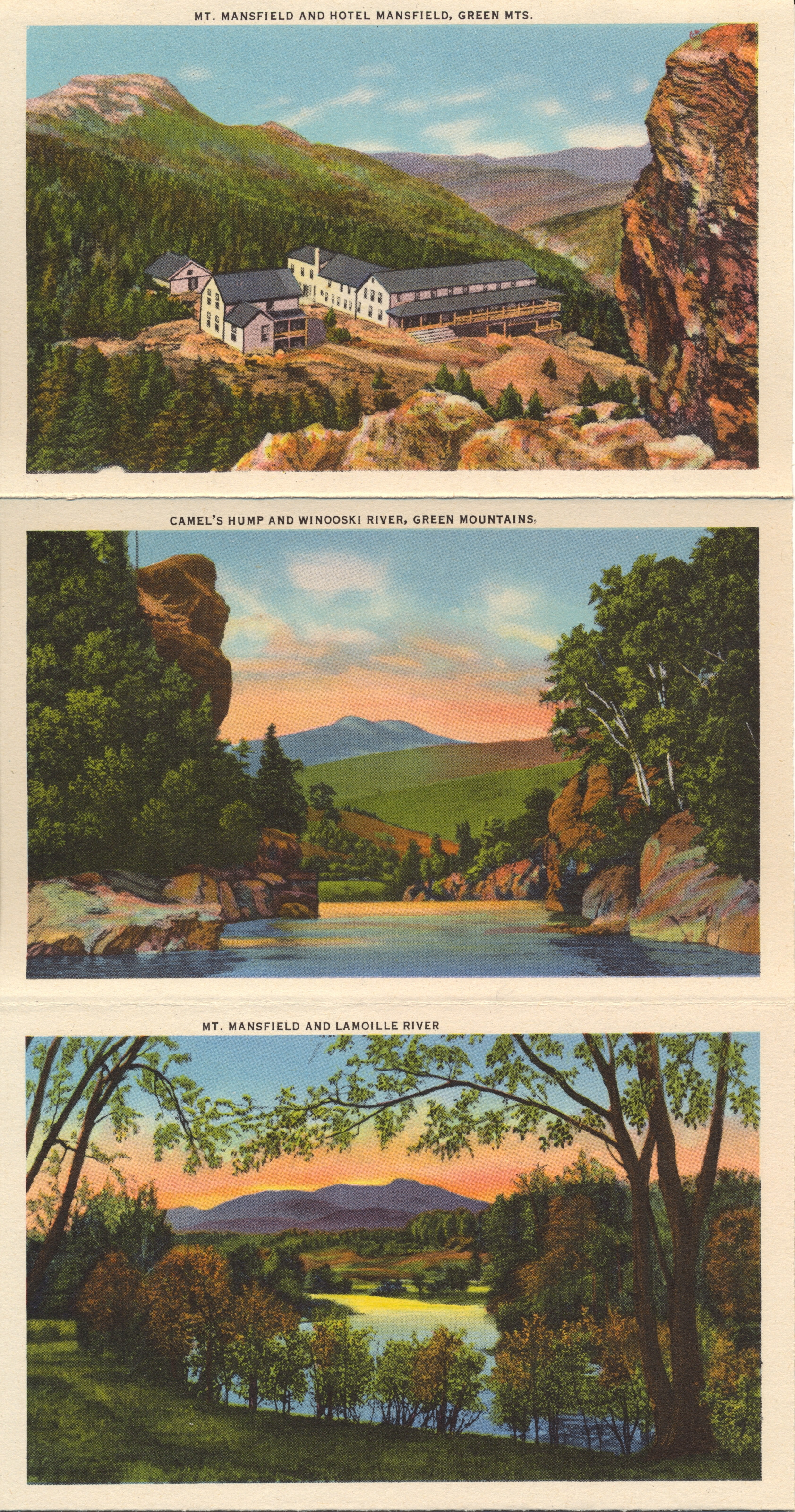
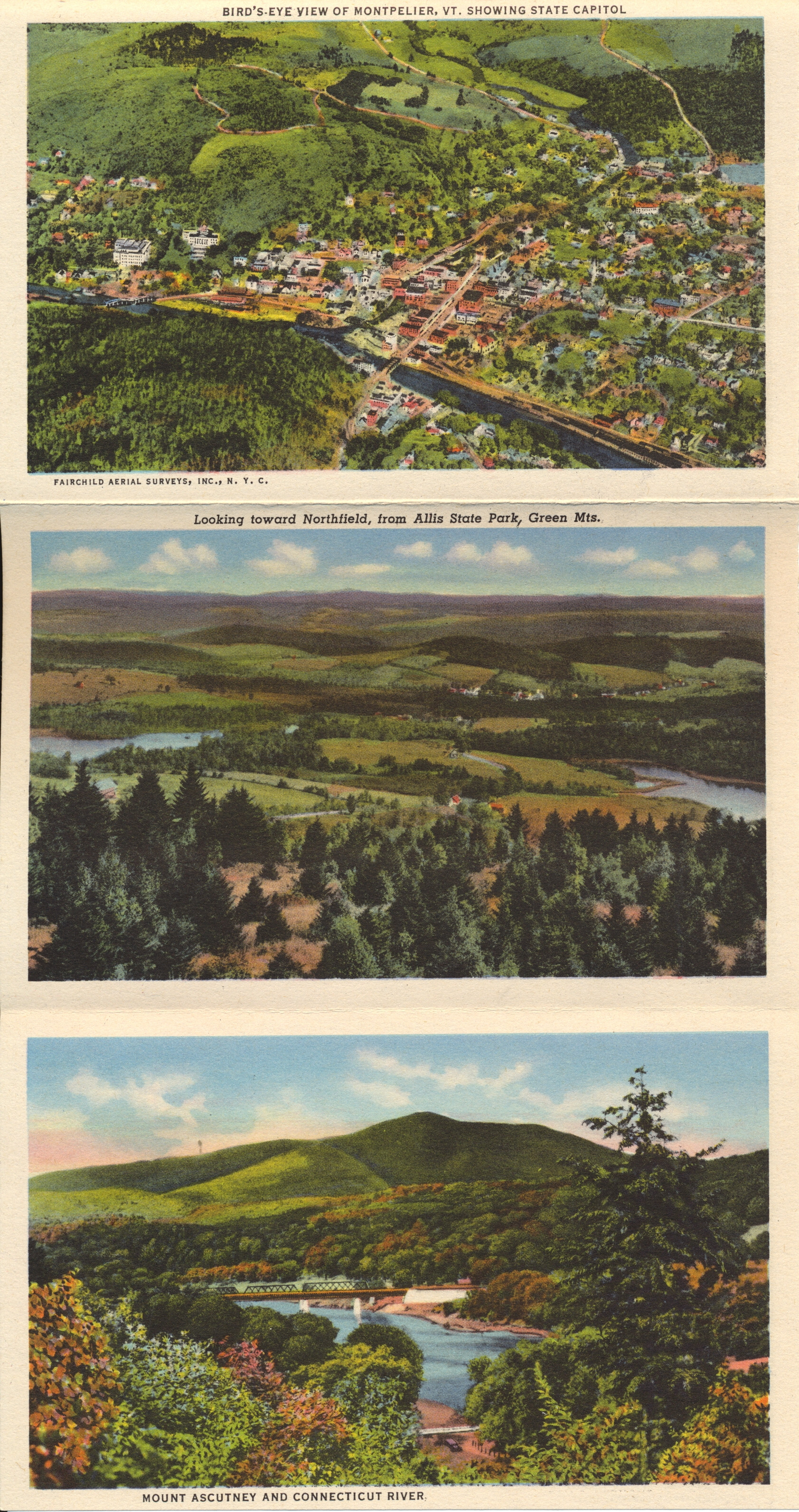
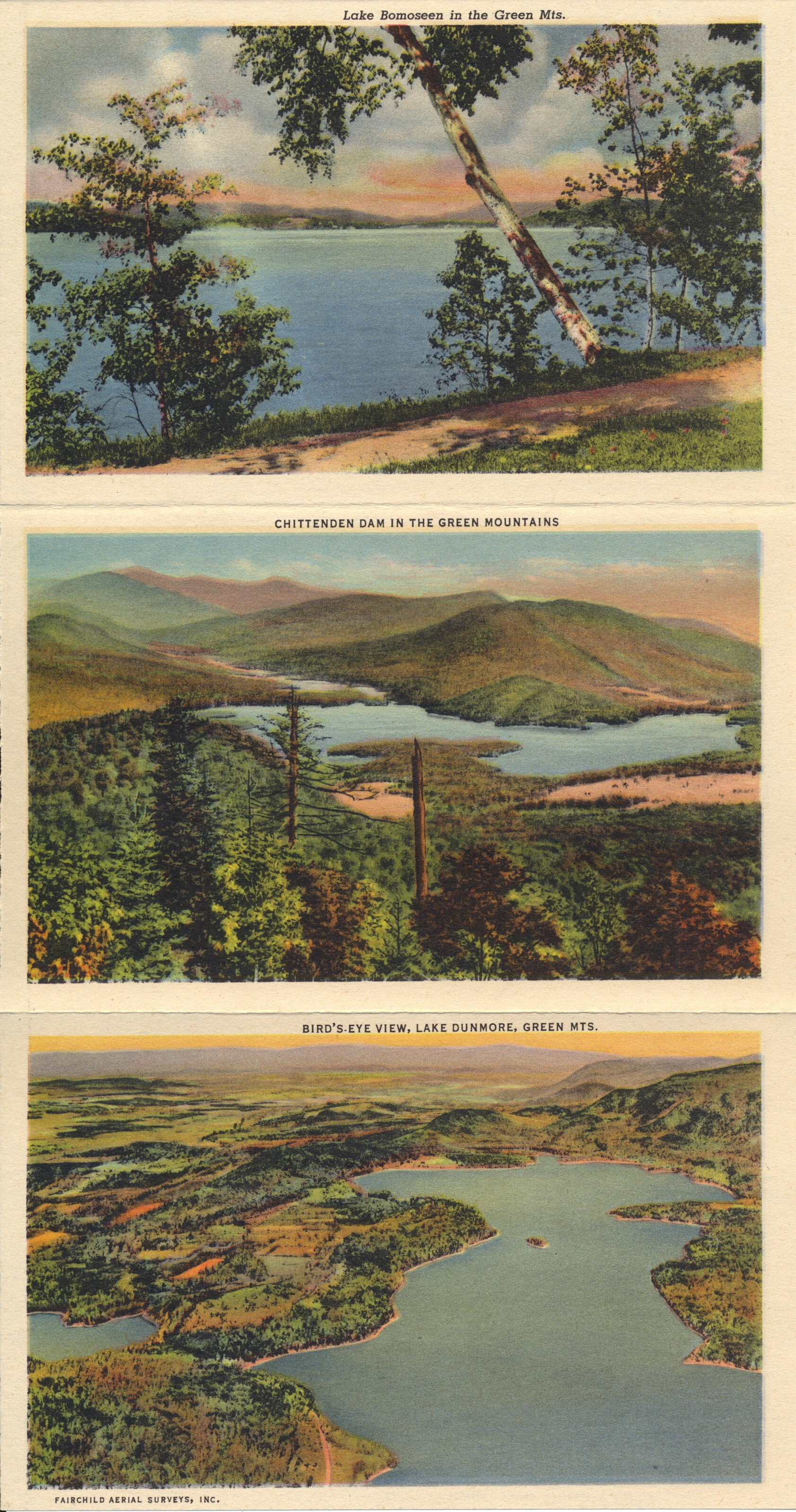
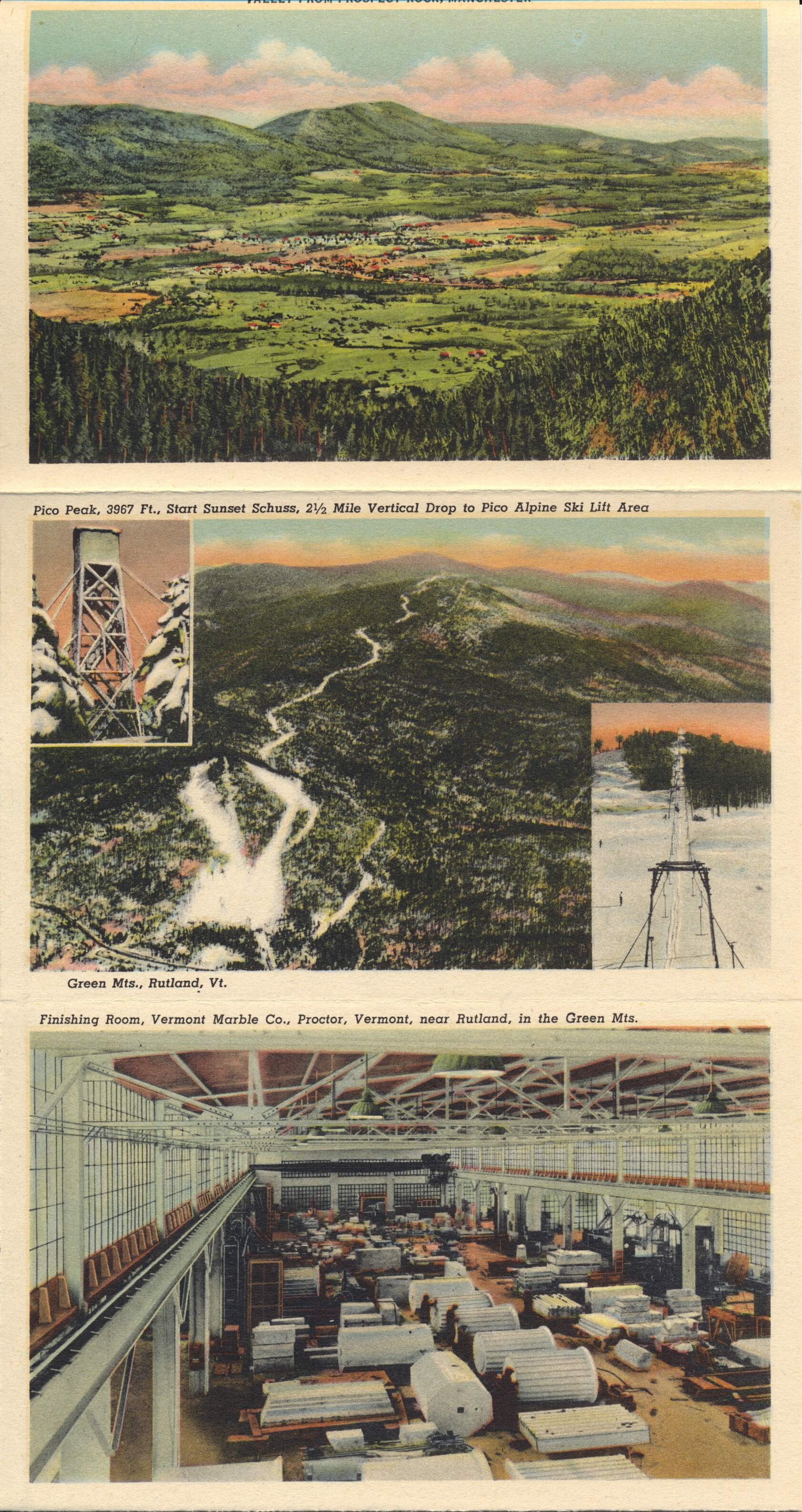
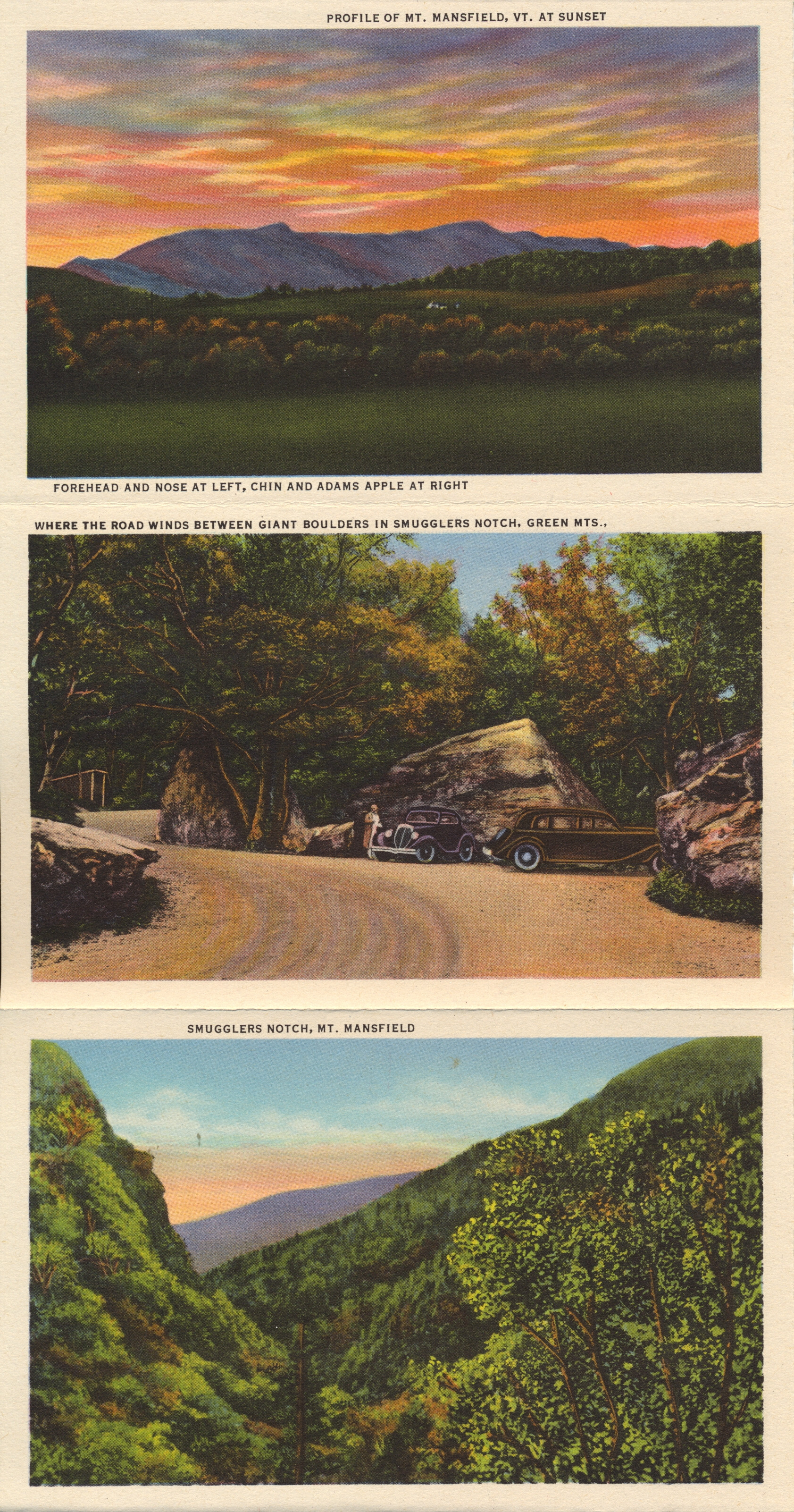
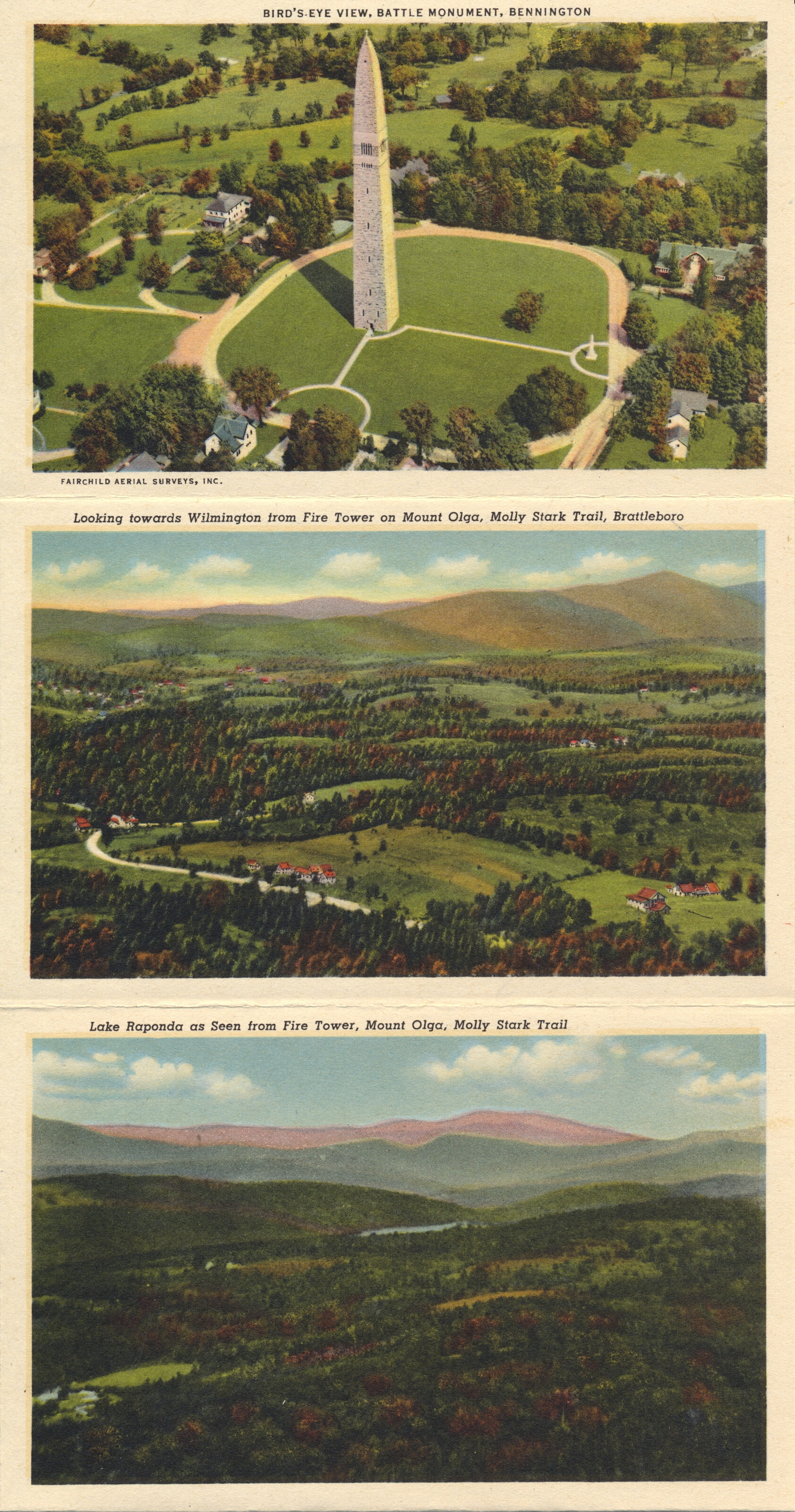
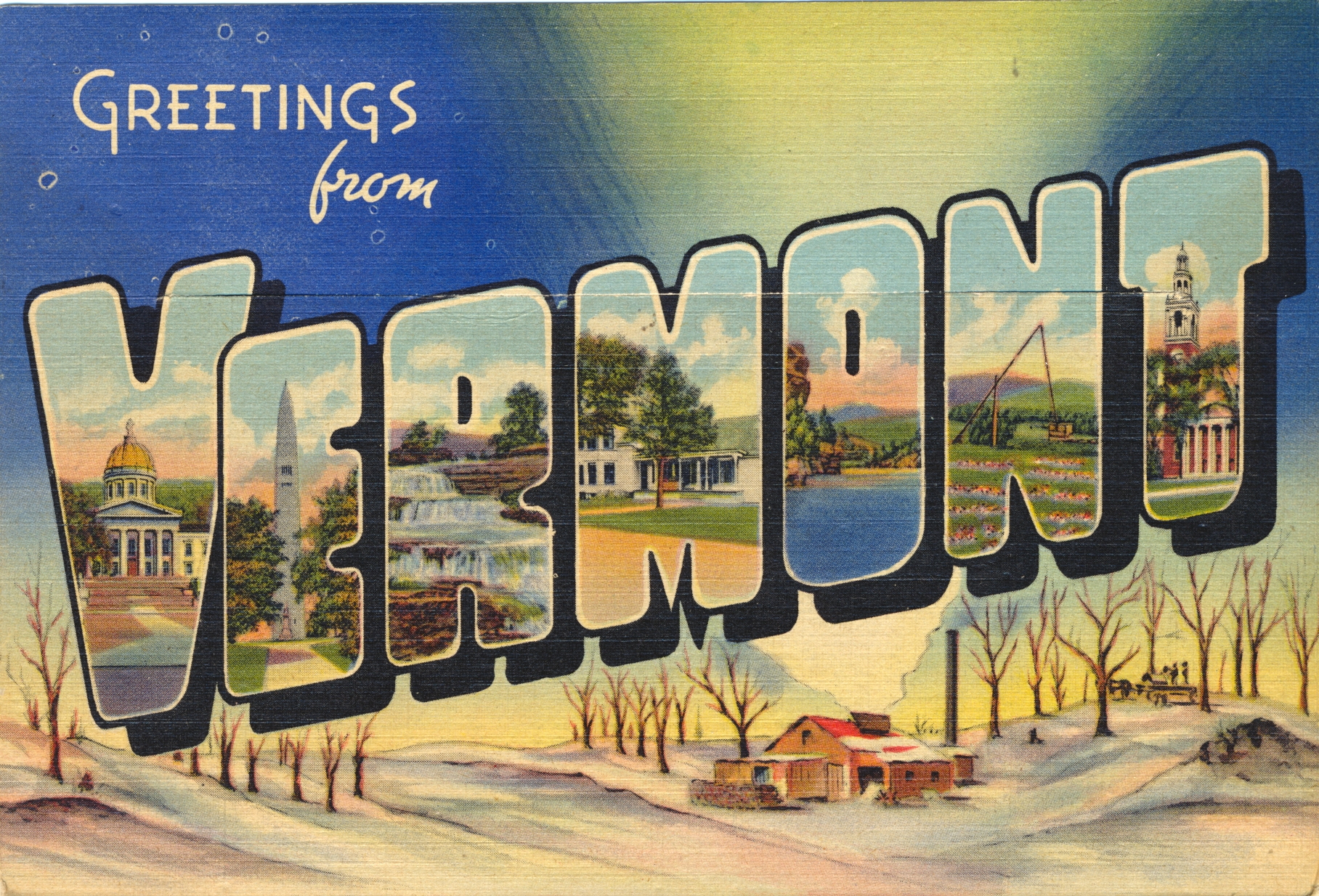
This folio was printed just before the United States joined the Second World War, and one copy in the collection was used and mailed to a soldier stationed at the POW camp in Fort Leonard Wood, Missouri. The copyright date on the cover of the folio is 1941, and the used folio was mailed in 1943.
Sunny Side Cabins, Utica, New York
The two week visit concludes with a restful visit in the Sunny Side Cabins of Utica, New York, some distance east of the Finger Lakes region where Watkins Glen State Park is located. These cabins are representative of the typical travelers’ lodgings of the late 1940s.

The description states:
SUNNY SIDE CABINS, finest in the state. Each with private bath, hot and cold running water, Simmons Beautyrest equipment. Spacious grounds.
Restaurant and filling station in connection.
–The Simmons Beautyrest is a trademark name for the mattresses and beds by the Simmons company, still made today. The term ‘in connection’ indicates there are restaurants and filling stations near by, but not part of the business. In later years more elaborate and larger such accommodations would indeed have restaurants as part of the establishment.
The varied size of the cabins showed indicate a selection of accommodations for larger or smaller groups. Of special note is the handwritten number on the bottom of the card. This was an amendment made by the provider, and not by the customer, as it is present on two different cards, one used and one unused. This change indicates a revision in addresses after the card was published, usually by the post office to normalize and standardize postal services and delivery.
The used card is postmarked August 1947.
Rainbow Falls, Watkins Glen, New York – 1950s
Another, later view of Rainbow Falls in the gorge of Watkins Glen State Park, from a colored black and white photo, similar to this earlier post.

The description on the back states:
One of the most famous water falls in the Lakes Country is Rainbow Falls. Here in the late afternoon brilliant rainbows flash in the Summer’s sun. (sic)
— This postcard was used, and is dated May 1954.
Pluto Falls, Watkins Glen, New York
This card begins an excursion at the Watkins Glen State Park near the village of the same name in upstate New York. The first card is a colored and edited image of Pluto Falls, a thin cascade that descends through a small fissure in the rocks to a pool below.

The water flow on this card has been enhanced and modified to provide a more dynamic appearance. This will be obvious in a later card showing the same image.
This card has no description on the back and was used. It is dated 28 August 1931.
Kitch-iti-ki-pi Spring Old Boat Launch, Manistique, Michigan
We start a weekend of views of the unique fresh water spring near Manistique, Michigan called Kitch-iti-ki-pi. It is located in the Upper Peninsula of Michigan.

This view shows the old raft launch viewing area and the raft slowly moving away in the distance as the passengers view the bottom of the spring. The water flows so fast and clear that it is possible to see the bottom quite easily, and among other views are constantly shifting sands that form shapes for interpretation much like clouds.
The description states:
KITCH-ITI-KI-PI SPRING
Near Manistique, Michigan
In a land of intensely cold winters the crystal-clear waters of the “Big Spring” never freeze over. Legend has it that an Indian maiden, spurning the attentions of an unwanted suitor, fell into the spring and was changed by the magic properties of the water into a white deer.
–As can be seen by the mechanical postmarking in the sky area of the card, the postcard was used and is dated 19 July 1956.
1917 Stutz Bearcat
This is an image of the legendary Stutz Bearcat, a model built, with interruptions, from 1911 until 1934. This example appears to be from 1917, based on the step-over sides, the external gearing, and the right hand drive.

The name was considered so valuable and iconic that it was reused in other completely different designs and by other manufacturers several times over later decades. It became a car that other sporty roadsters were compared to even into the 1950s and 1960s.
This image is on a card used as a marketing promotion for the Gezon Motor Sales Company of Grand Rapids, Michigan, to remind customers to have their current cars serviced. This card was used, and is dated 3 January 1957.
1913 Mercer Raceabout
This sporty model is from the Mercer Car Company. It had some high powered executives, including members of the Roebling family, famous for the construction of the Brooklyn Bridge.

The description states this model was built with a 30hp engine, while other sources indicate it was 55hp. The car was built as right hand drive with the windshield mounted in a frame on the steering wheel. The car was a very successful racer in its early years, even considering the gas tank was immediately behind the seat backs. The company was closed in 1925.
The postcard itself was used as a marketing reminder by the Gezon Motor Sales in 1957.
1912 Brush Runabout
This brightly colored two seater was built by the Brush Motor Car Company in 1912. They built these runabouts exclusively, and this one sported a 10 horsepower engine. In 1910, Brush and several other small manufacturers merged into the short-lived United States Motor Company. This company failed in 1913.

This card, like the others in this series, was a marketing tool for encouraging customers to bring their cars in for regular service, in this case every 1000 miles. The company credited below the photo, Gezon Motor Sales, is still in business in Grand Rapids, MI today.
The card is postmarked 1957.