This image shows an extended Navajo family in front of a typical domicile wearing clothes common for the 20th Century, and for the women, for some time before.

The description states:
14–NAVAHO INDIANS AT HOME
The Navajo Indians, 50,000 in number, show little influence of the advance of civilization, living by the primitive methods of their forefathers. Many of them live in such remote districts far from civilization that they seldom see a white man.
Their hand made blankets, of wool from the sheep raised by them are known for their unexcelled quality and design throughout the world. Their hand made jewelry is as much sought for.
–This image likely dates from the 1940s.
Tag: postcard
Pueblo Indian in Traditional Clothes, New Mexico
This image shows a Native American from the Pueblo nation dressed in traditional clothing.

The description states:
K60–PUEBLO INDIAN
Pueblo Indians are colorful dressers during ceremonials and fiestas. Each Pueblo clings to the old traditions and religious customs of their forefathers. Taos Indian pictured is in winter dress. In summer white blankets are worn.
–While it is unlikely that blankets would be used in the heat of the desert summer, the color of the blankets would have a potentially positive effect on heat dispersion, as white is less likely to absorb heat from the sun.
This image likely dates from the 1950s.
Indian Silversmiths, New Mexico
This image shows several silversmiths working in their factory, seated on the dirt floor with their tools arranged around them at their workbenches.

The description states:
K101–INDIAN SILVERSMITHS
In a typical Hogan we see three Silversmiths at work. Their materials are cons silver and turquoise. The genuine Indian Jewelry is much in demand due to its beauty and original design, two pieces never being alike.
–This business was an important income source for the Native American population in the Southwest, there being little other business or manufacturing nearby to provide jobs.
This image likely dates from the 1950s.
Navaho Silversmith, Gallup, New Mexico
This image shows a Native American from the Navajo nation working at his anvil on silver jewelry.
 There is no description on the back of this card.
–Of interest in this picture is the anvil in use, which is a small section of rail from a railroad somewhere, which is in turn nailed to a circular piece of wood as it’s base.
This image likely dates from the 1940s.
RCMP Parade Drill, Canada
This image shows the iconic Royal Canadian Mounted Police on their mounts in formation practice.

The description states simply:
The famed Royal Canadian Mounted Police drilling for the colorful Musical Ride.
–The Ride is performed world-wide since its beginnings in 1887.
This card was used and is dated 26 August 1965.
Victoria Glacier Overlooking Lake Louise, Canada
This image shows a pair canoeing on Lake Louise, Alberta in the shadow of Victoria Glacier, which provides most of the water for the lake from glacial runoff.

The description states:
Lake Louise and Victoria Glacier
Banff National Park, Canadian Rockies
–While the glacier seems quite close, there is a considerable distance of flat, dry land between the lake and the foot of the mountain behind.
This card was used and is dated 16 July 1963.
Lake Louise, Banff National Park, Canada
This image shows a portion of Lake Louise and the glaciated mountains that surround it and provide the water. It is located in Alberta Province on the border with British Columbia.

The description states:
SUNRISE ON LAKE LOUISE
Banff National Park
The Canadian Rockies
–The postcard was used and is dated 24 July 1967
Beaver Dam in Ontario, Canada
This image shows a typical beaver dam structure, a once-common sight throughout North America until the beaver was hunted to near extinction in much of its normal range.

The description states:
CANADIAN WILDLIFE POST CARD SERIES
BEAVER DAM
Beavers build dams for their won protection, and in turn conserve and store water, benefitting many forms of wildlife.
— There are both benefits and disadvantages to these dams. The risk of dam failure and flooding are among the major problems they pose when near populated areas.
This image likely dates from the 1950s.
Inland Lakes, Ontario Canada
This image is an example of a typical lake near the northern shore of Lake Superior in Ontario, Canada.
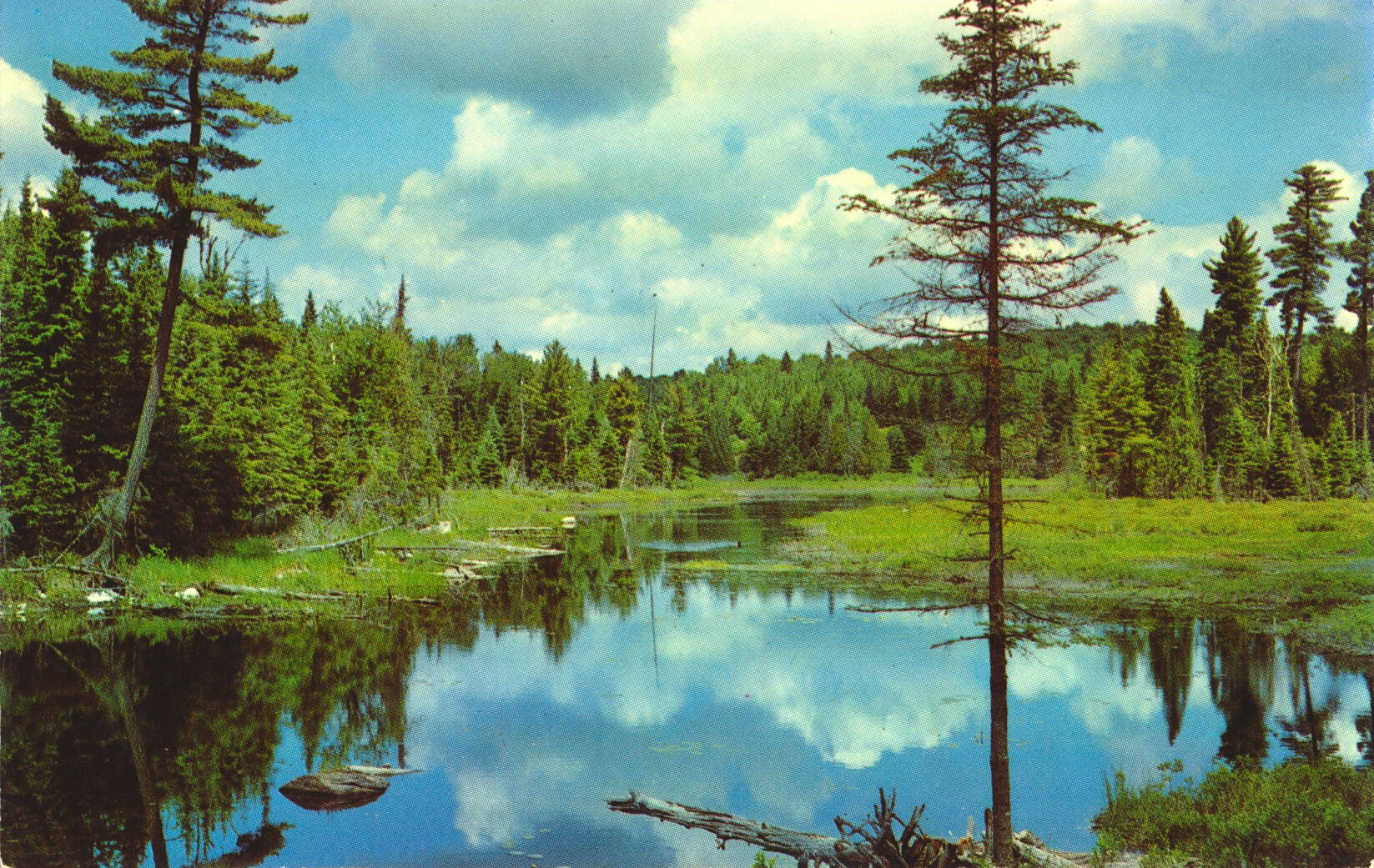
The description states:
CANADIAN LAKE SUPERIOR POST CARD SERIES
Placid scenery of inland lakes.
–The precise location is not known. This card likely dates from the 1950s.
Trans Canada Highway Bridge near Fort William, Ontario
This image shows a bridge along the Trans Canada highway, with tourists admiring the view and taking pictures for souvenirs.

The description states:
CANDIAN LAKE SUPERIOR POST CARD SERIES
Trans Canada Highway east of the lake head cities of Port Arthur and Fort William, Ontario.
–Both the cities mentioned above, and a few others, were combined administratively into a single city named Thunder Bay, which is located near the US-Canadian border with Minnesota.
This card likely dates from the 1950s.