The final Las Vegas location of this week continues the arid theme common for the era. The Sands Hotel was a modest start, just a few hundred rooms along with the casino, but it hosted the filming of Ocean’s 11, which is considered the birth of the Rat Pack. They performed at the legendary Copa Room stage at the Sands, among many other stars of the era.

The description states:
THE SANDS
A Place in the Sun
LAS VEGAS, NEVADA
The newest luxury hotel in Las Vegas, world renowned for its head line entertainment, luxurious living accommodations and complete shopping and amusement facilities.
–The statement above noting that the Sands was the newest at the time of the photo points to the photo dating from 1953. In the end, even though it was expanded with a landmark circular tower, the Sands was demolished and replaced with the Venetian on the same site.
Tag: 1950s
Hotel Flamingo, Las Vegas, Nevada
The Hotel Flamingo was the first luxury resort on the strip, and it’s early history is deeply entwined with the influence of the mob, including such famous figures as Bugsy Siegel and Meyer Lansky.

The description states:
THE SHOWPLACE OF THE NATION
FLAMINGO HOTEL, LAS VEGAS NEVADA
This is a view of the grounds of the Famous Flamingo Hotel, showing in the center of its beautiful landscaped gardens.
–The resort still exists, but has been extensively reconstructed several times since this image, so there is literally nothing left of what you can see here. The image is from the 1950s.
Hotel Sahara, Las Vegas, Nevada
We move away from Fremont St. to the early developments along the strip. The Hotel Sahara anchored the north end of the early Strip, and was the last of the pre-1969 hotels to be demolished. It hosted many famous performers, not least of which were the Rat Pack, a group of entertainers including Frank Sinatra, Dean Martin and Sammy Davis, Jr.

The description states:
HOTEL SAHARA
LAS VEGAS, NEVADA
The last word in modern luxury hotel construction. Famous stars appearing nightly to entertain. Renowned for fine food and luxurious living.
–The hotel expanded many times over the years, but was finally closed in 2011, and will be replaced with a mega-resort on the same site. This image is of the hotel just shortly after its initial completion, and dates from the 1950s.
Horseshoe Club, Fremont St., Las Vegas Nevada
Proceeding down Fremont Street in Las Vegas, we finally come to the Horseshoe Club. Looking at the previous postcard, you can see the same Hotel Apache sign in the far background on the left, as is shown on top of the club building in this picture. The Hotel Apache and Eldorado Club were purchased by Benny Binion and restyled the Horseshoe Club.

The description states:
THE HORSESHOE CLUB
FREMONT STREET — LAS VEGAS, NEVADA
The new Horseshoe Club is another notable showplace of Las Vegas, Nevada. The Tourists, visitors, and Las Vegans, have found here the perfect combination of restful atmosphere and all the modern conveniences for relaxation. There is a restaurant serving de luxe meals at low prices, one of the largest bars in Nevada, nearby parking, and all games of chance for which Nevada is famous.
–Now it is called Binion’s Horseshoe, and anchors one end of the Fremont Street experience. Since the description indicates the club is new, it is possible to date this card to the 1950s.
Fremont St. and South Main St., Las Vegas, Nevada
From the train station we walk quickly through Union Plaza and emerge at Main Street and the head end of Fremont Street, shown in the image today. On the right is the Sal Sagev Hotel (Las Vegas spelled backwards), which has been reconstructed,restored and renamed the Golden Gate Hotel and Casino. Across the street is the Overland Hotel, now the Las Vegas Club. The sky is no longer visible on Fremont, as the street has been covered with an arching screen that serves as a backdrop to a nighttime light and image show.

The description on the card states:
Day or night, it’s always time for fun and relaxation on Fremont Street, Las Vegas, Nevada
— In this time, before the development of the Strip, Fremont Street and surrounding area was the center of Las Vegas tourism and gambling. With the arrival of the first wave of resort hotel/casinos, the tourist traffic began its move to the south, which was accelerated by the construction of the mega-resort/casinos. Fremont Street merchants had to make extensive changes to attract tourists and money back to the area, and they called the result the Fremont Street Experience.
This card dates from the 1950s.
Union Pacific Station, Las Vegas, Nevada
We are in Las Vegas, Nevada at the arrival of the Desert Wind in this postcard image. The station no longer exists in this form, having been demolished and a new station built, incorporated into the Plaza Hotel & Casino on the same site.

The description states:
The new passenger depot of the Union Pacific in Las Vegas, Nevada, is the world’s first streamlined, completely air conditioned railroad passenger station. Typically modernistic western in motif, the structure has been described by architects as one of the most beautiful in design and superlatively complete in appointments, in the United States.
–The architectural style is called Streamline Moderne, and was intended to complement the streamlined train designs of the era. The Desert Wind train that served this station was discontinued, but there is an ongoing effort to restore passenger train service from Los Angeles to Las Vegas.
This card dates from the 1950s.
Cave of the Mounds, Blue Mounds, Wisconsin
Now, after two weeks of images from the Cave of the Mounds in black and white, this folio shows many of the same locations, and more, with colored photos. The pictures are not simply the same photos colorized, but new photos taken of similar locations and with better lighting.
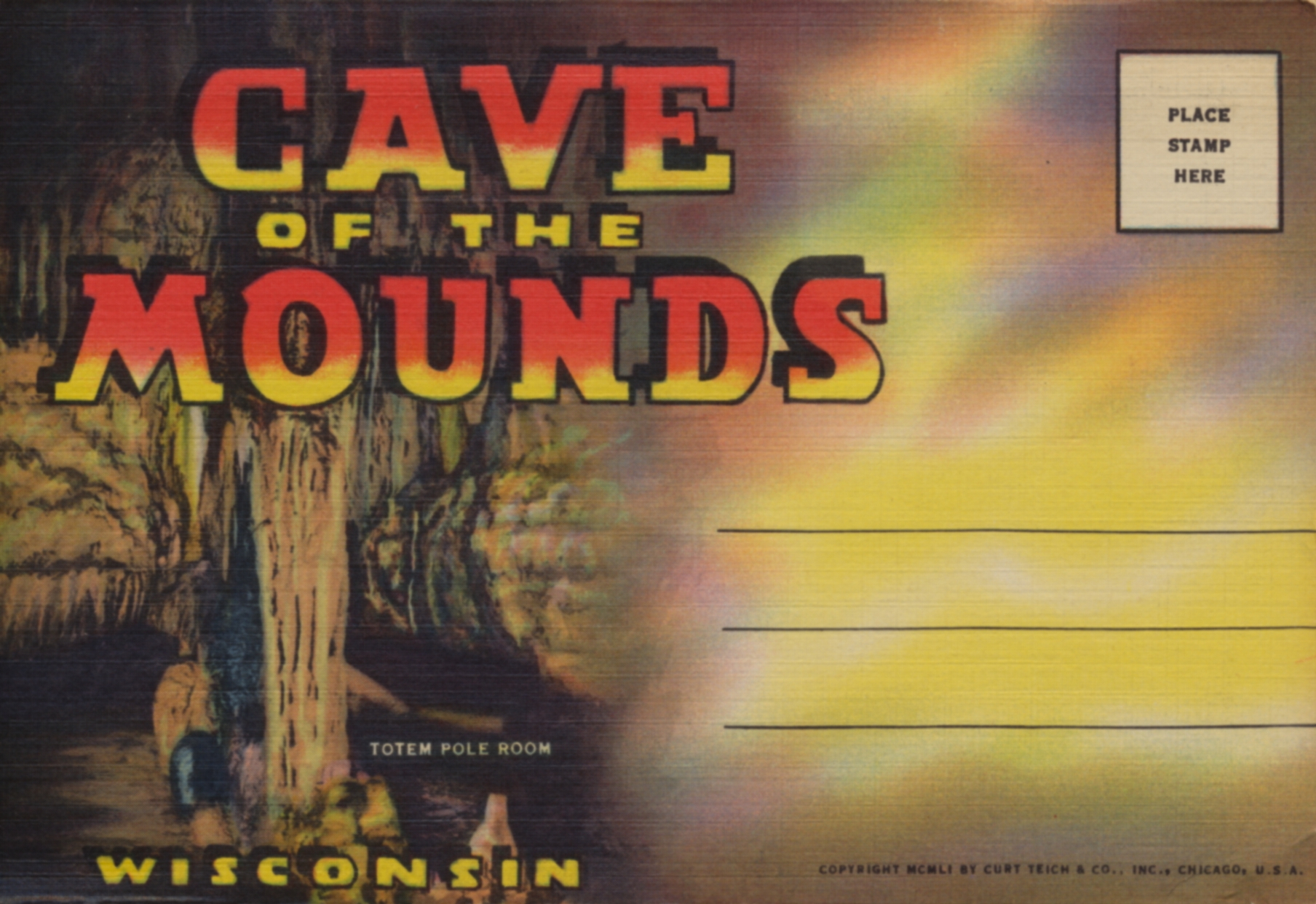
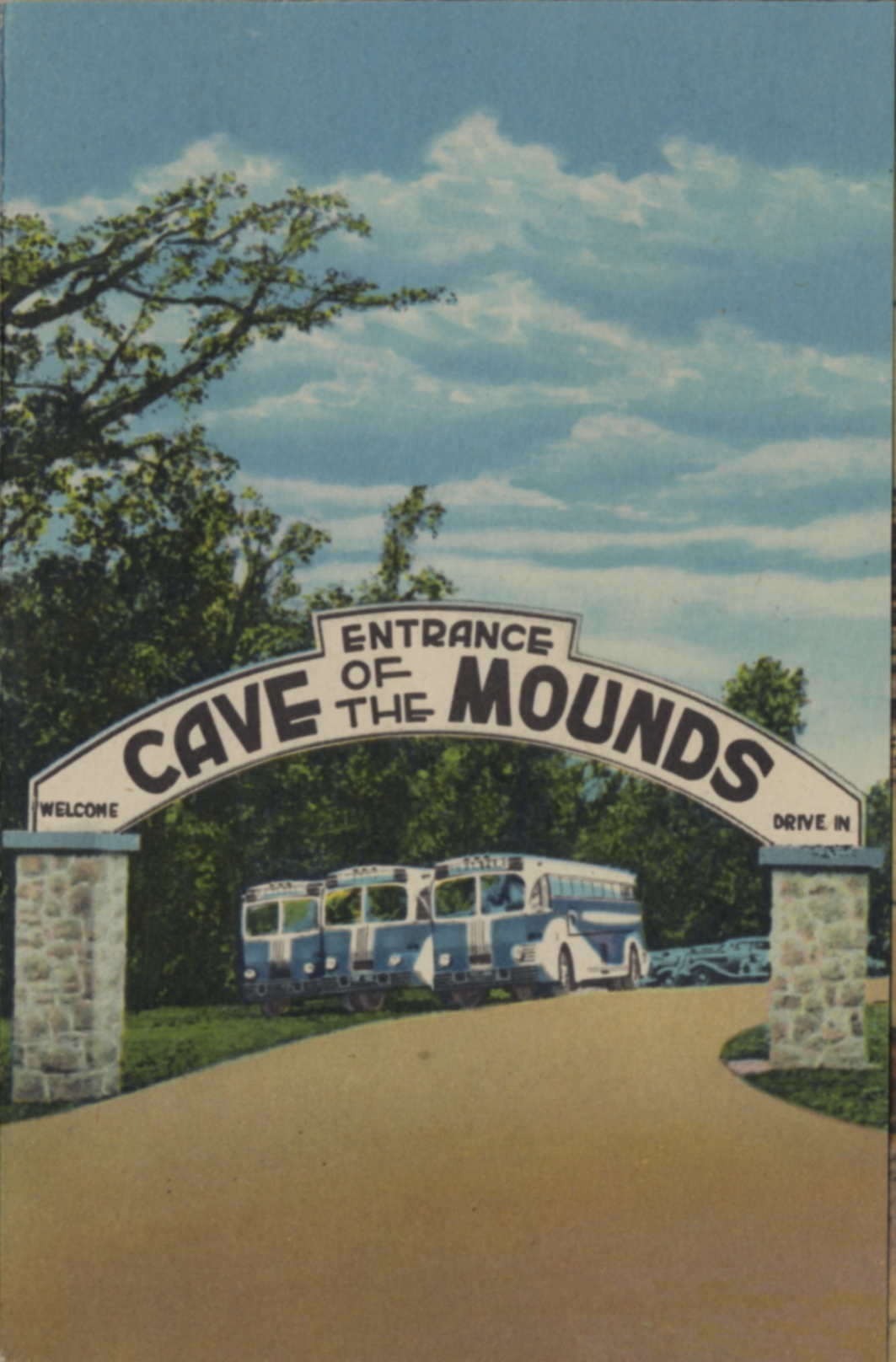
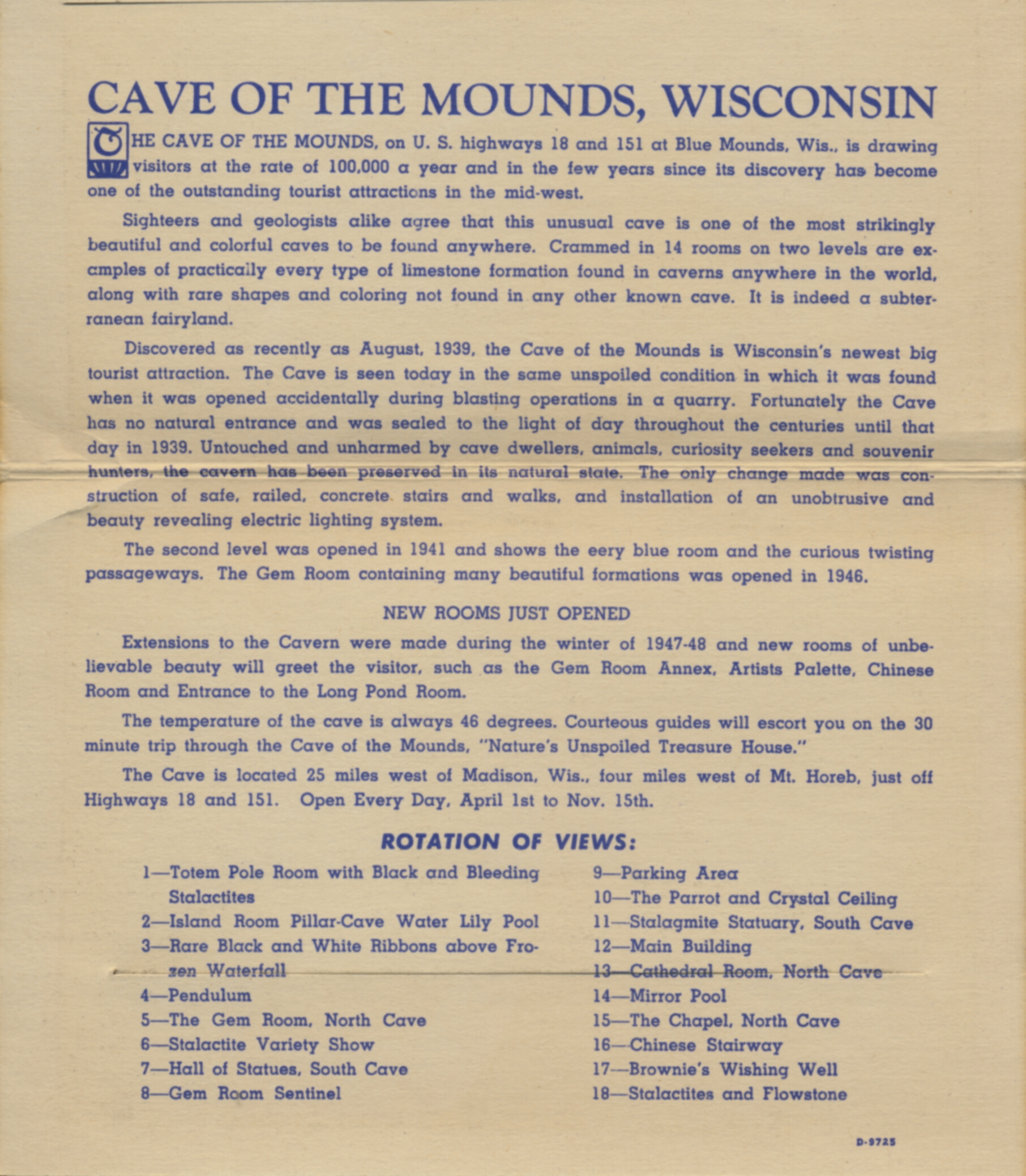
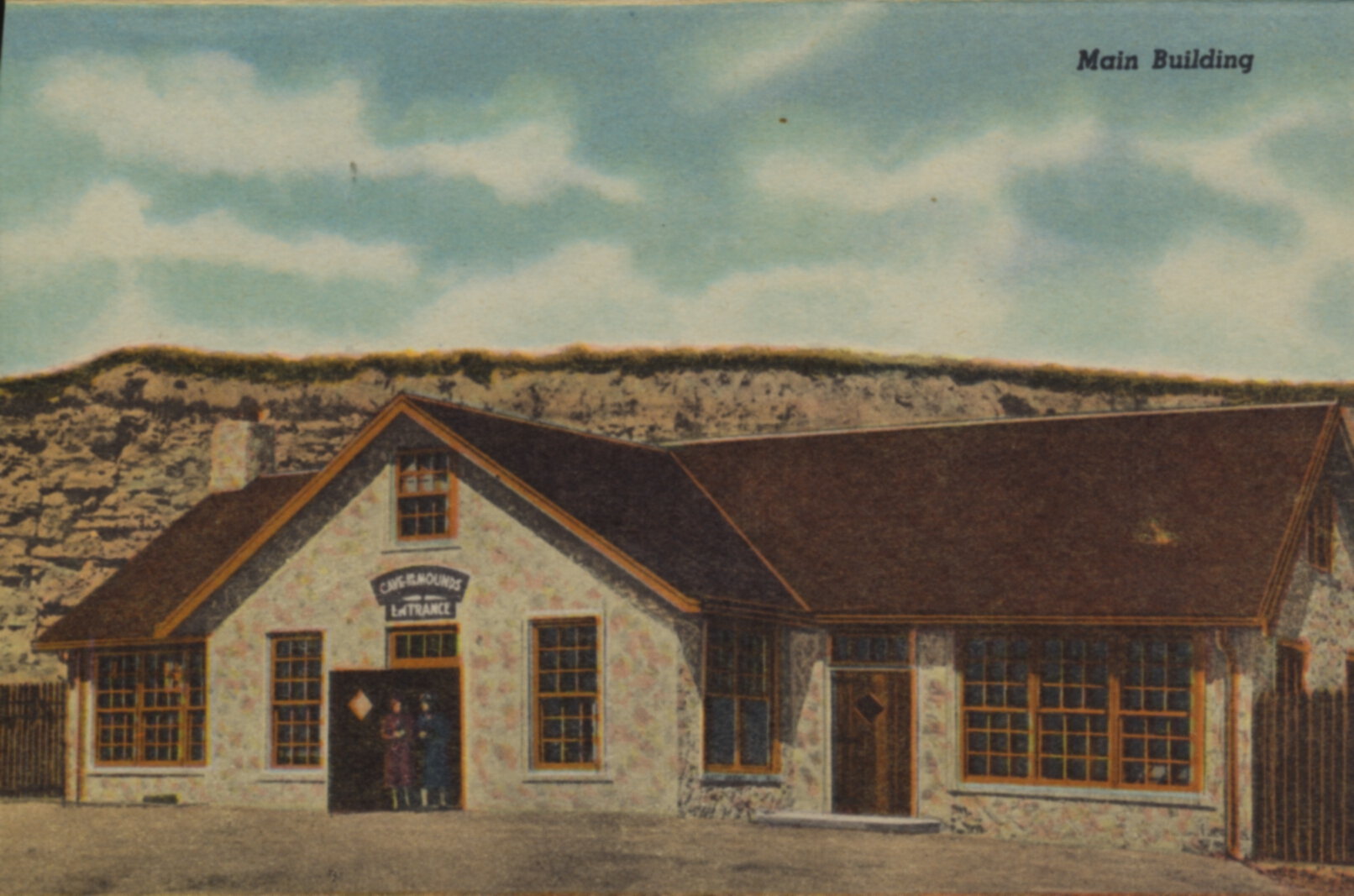
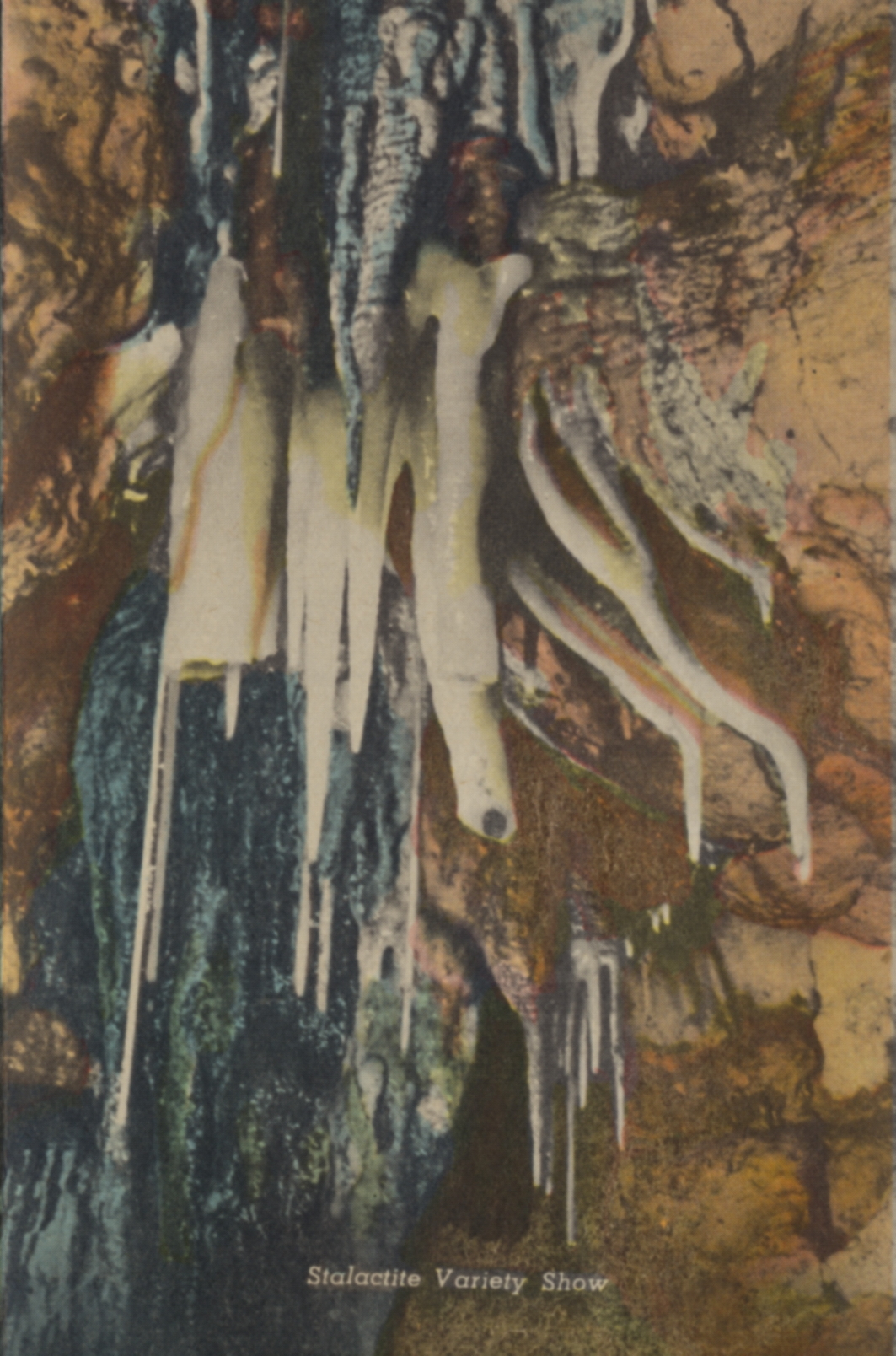
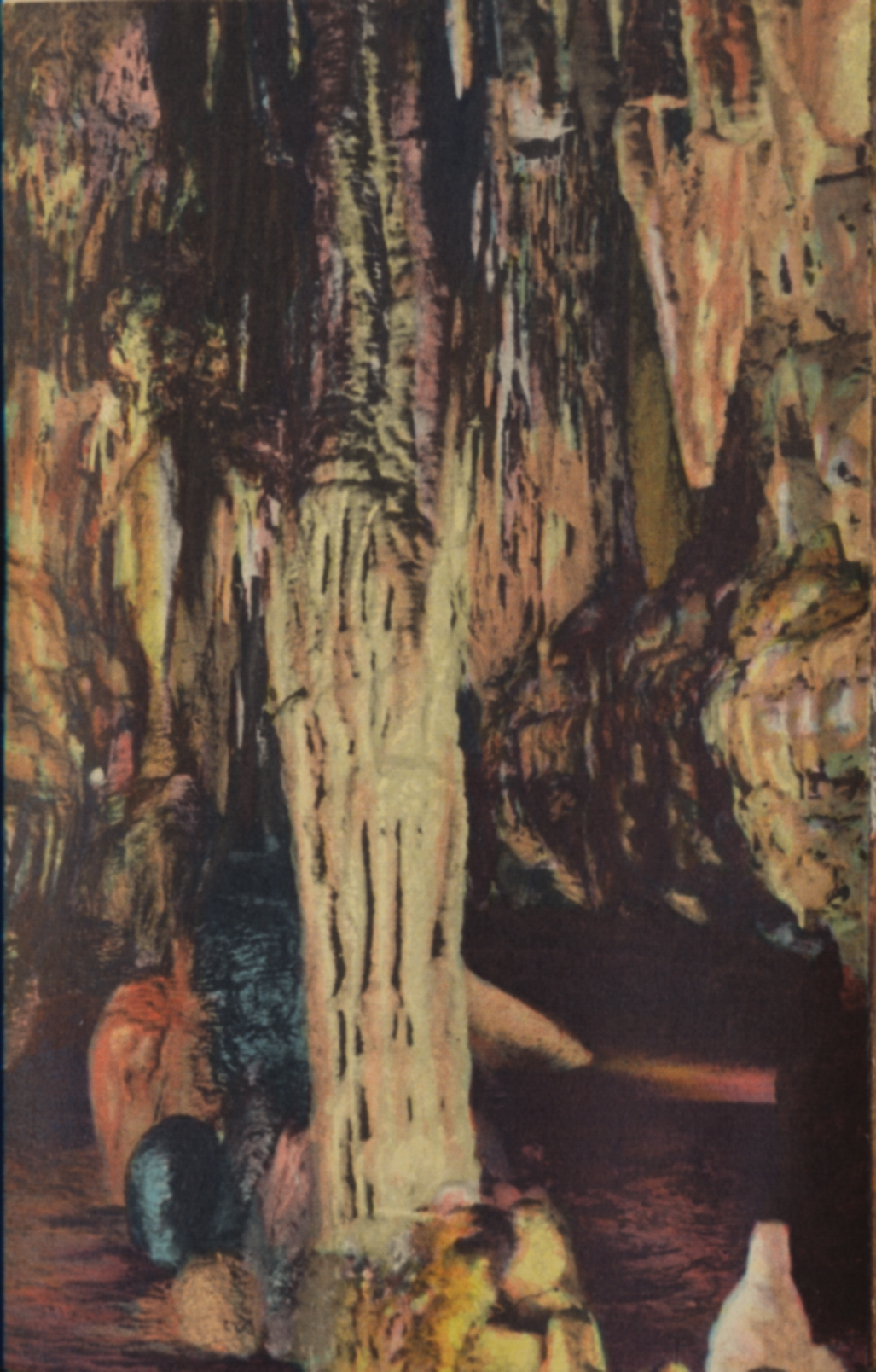

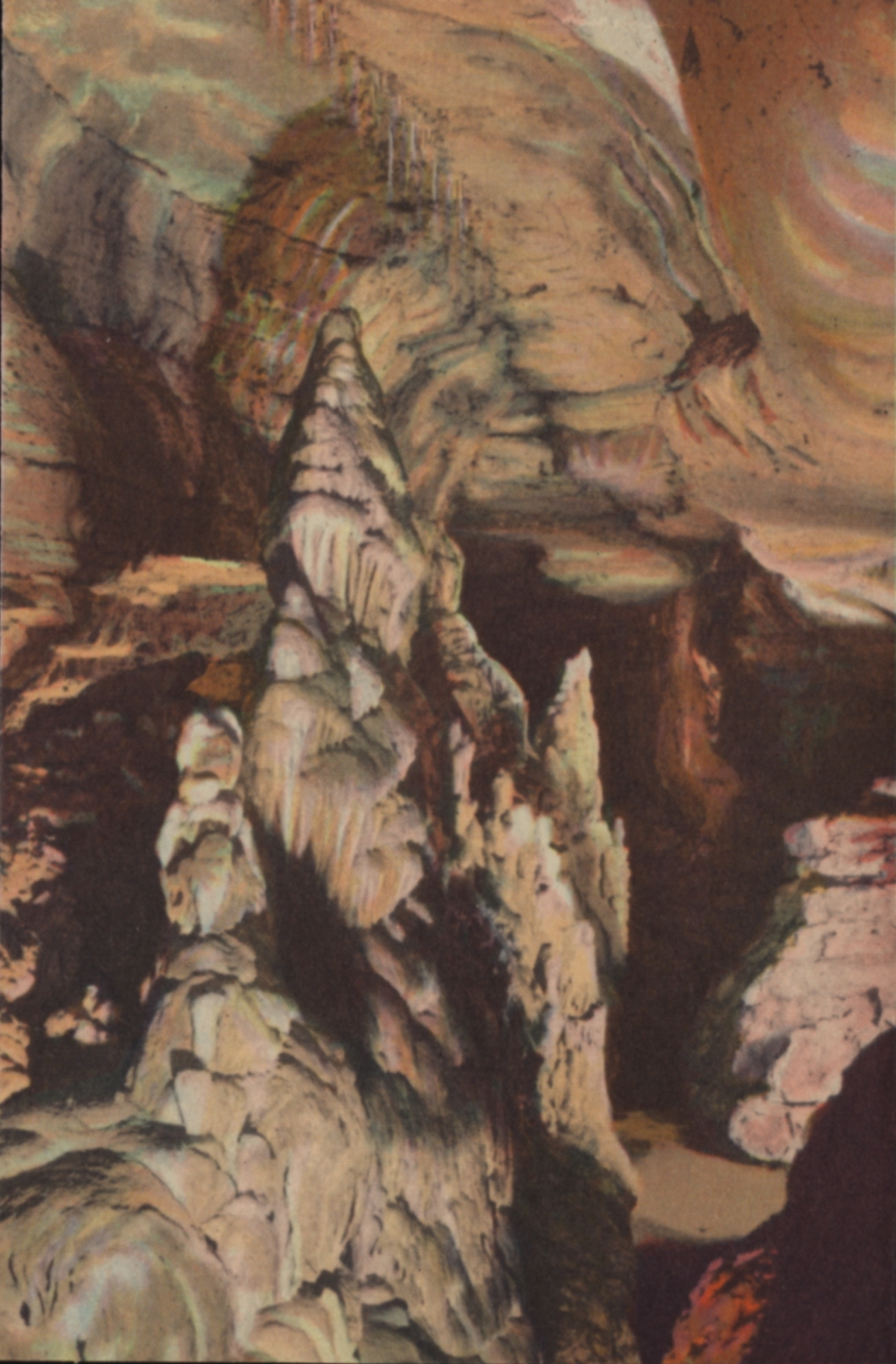
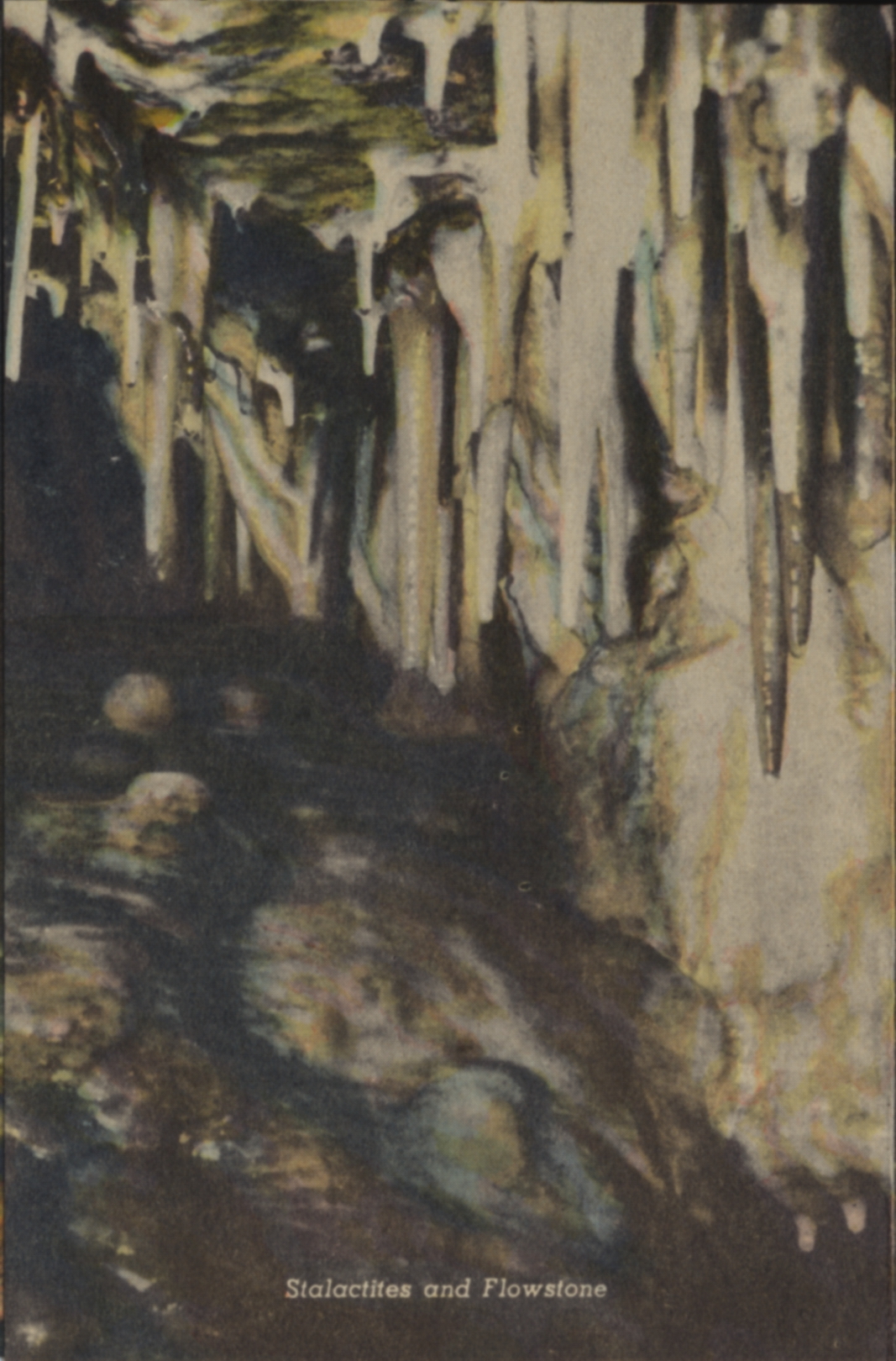
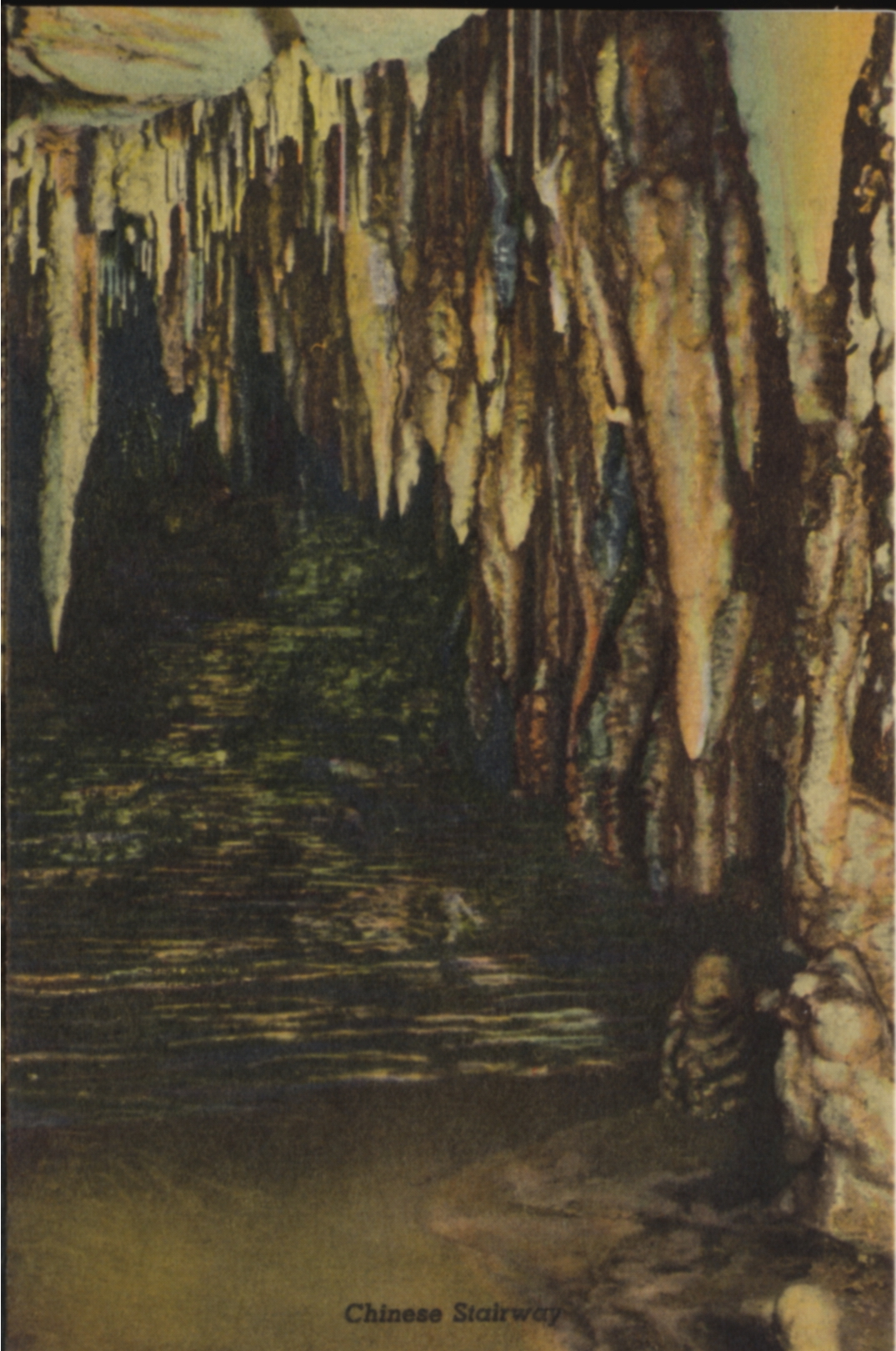

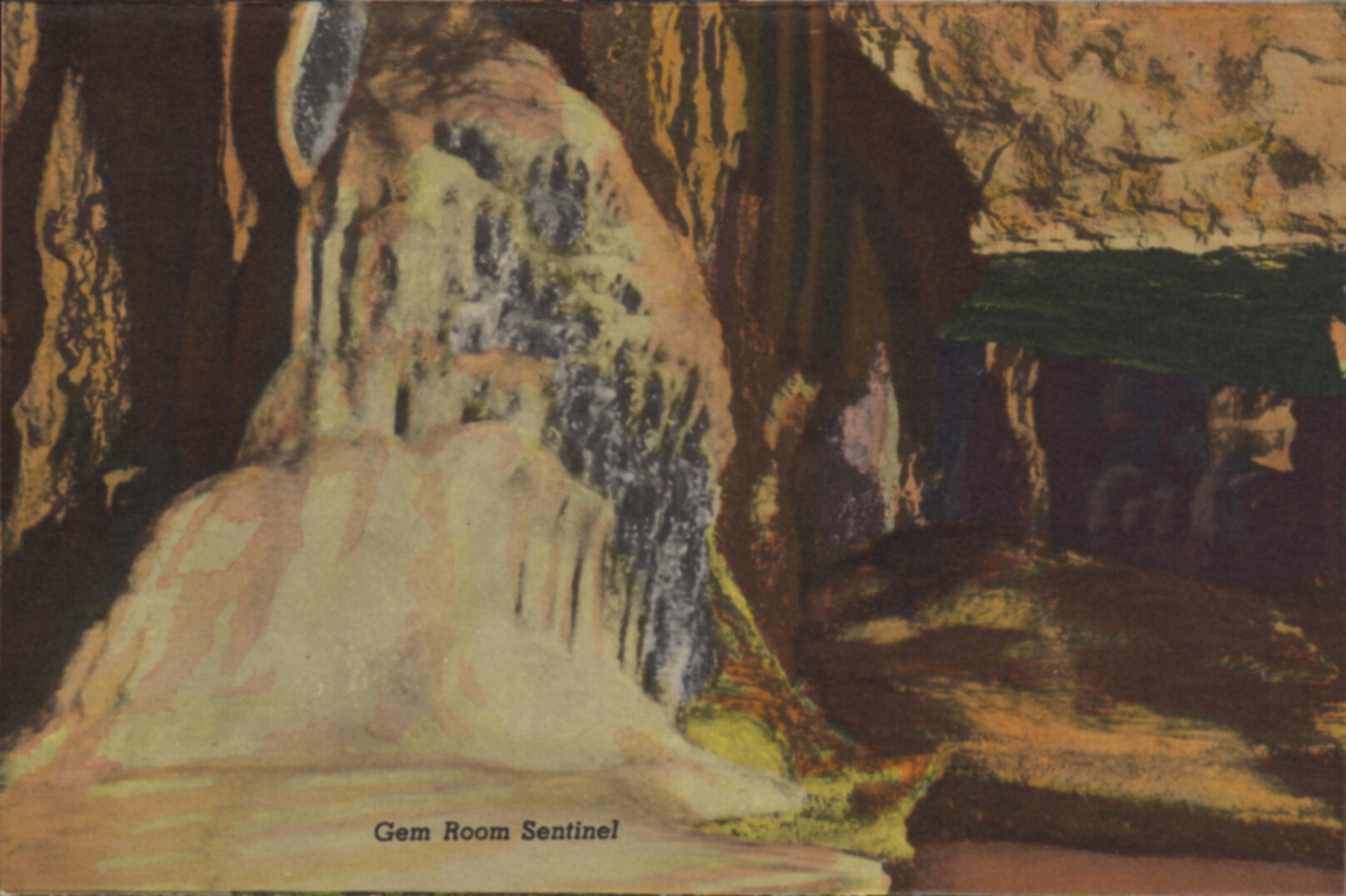
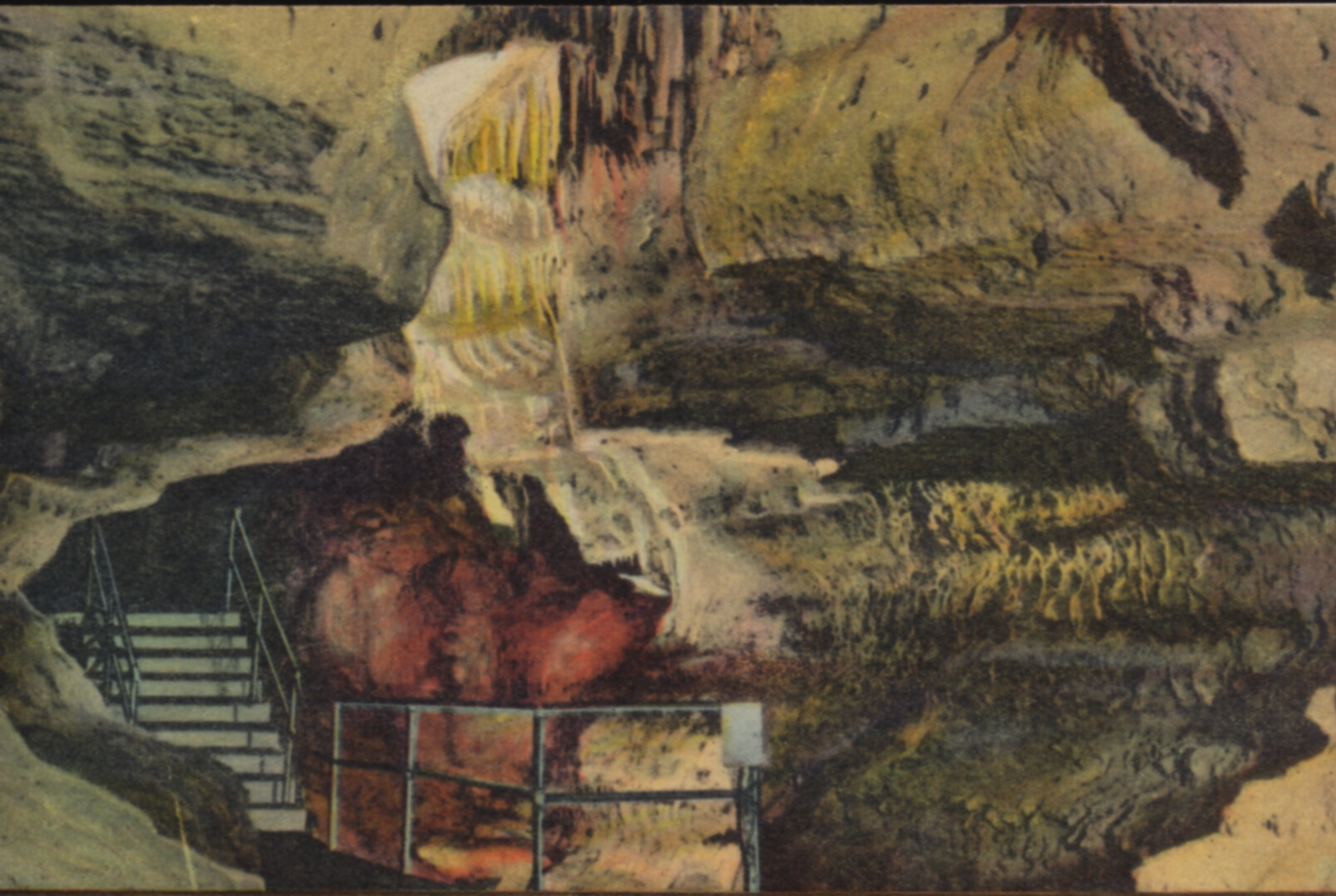
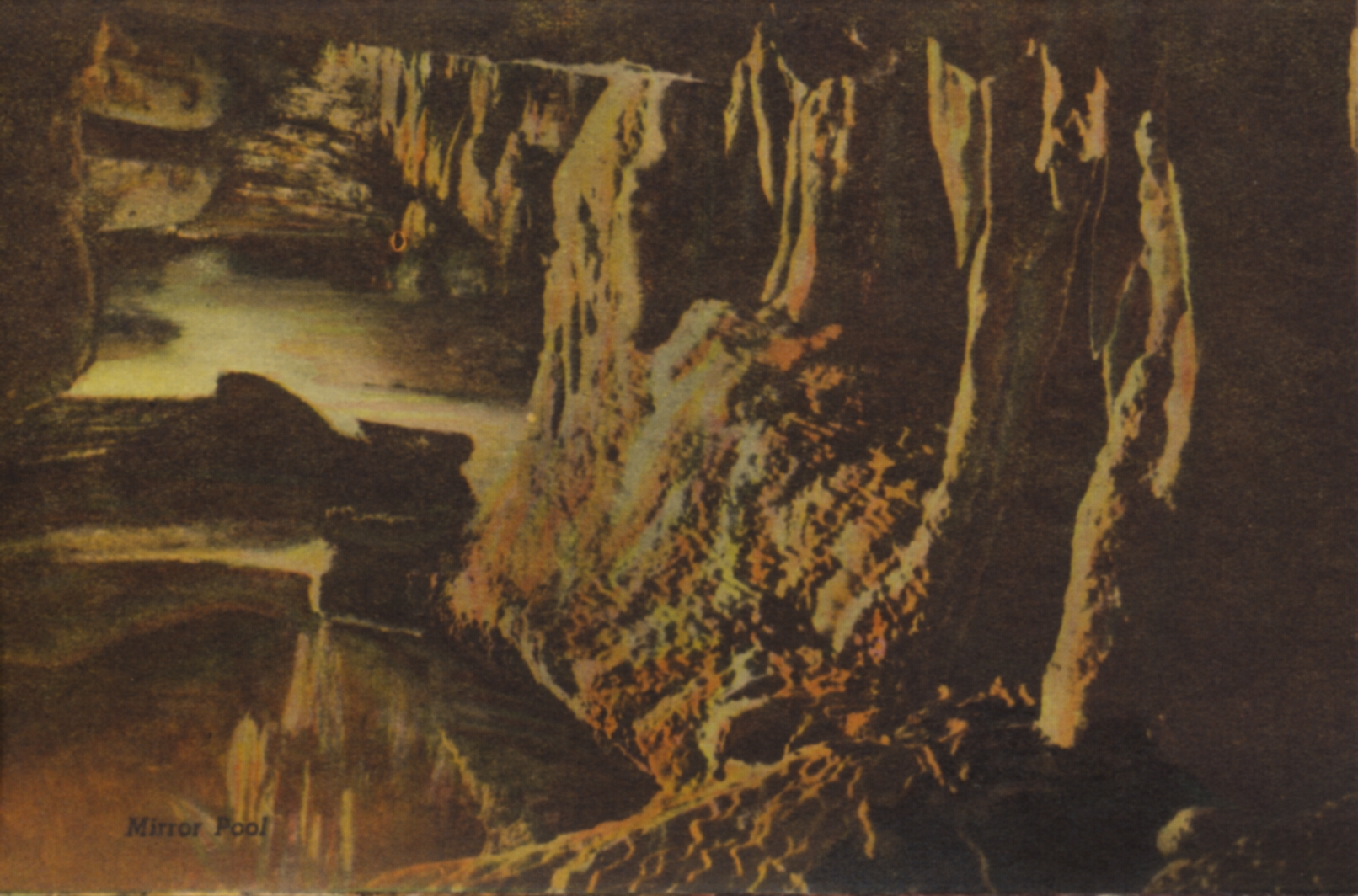
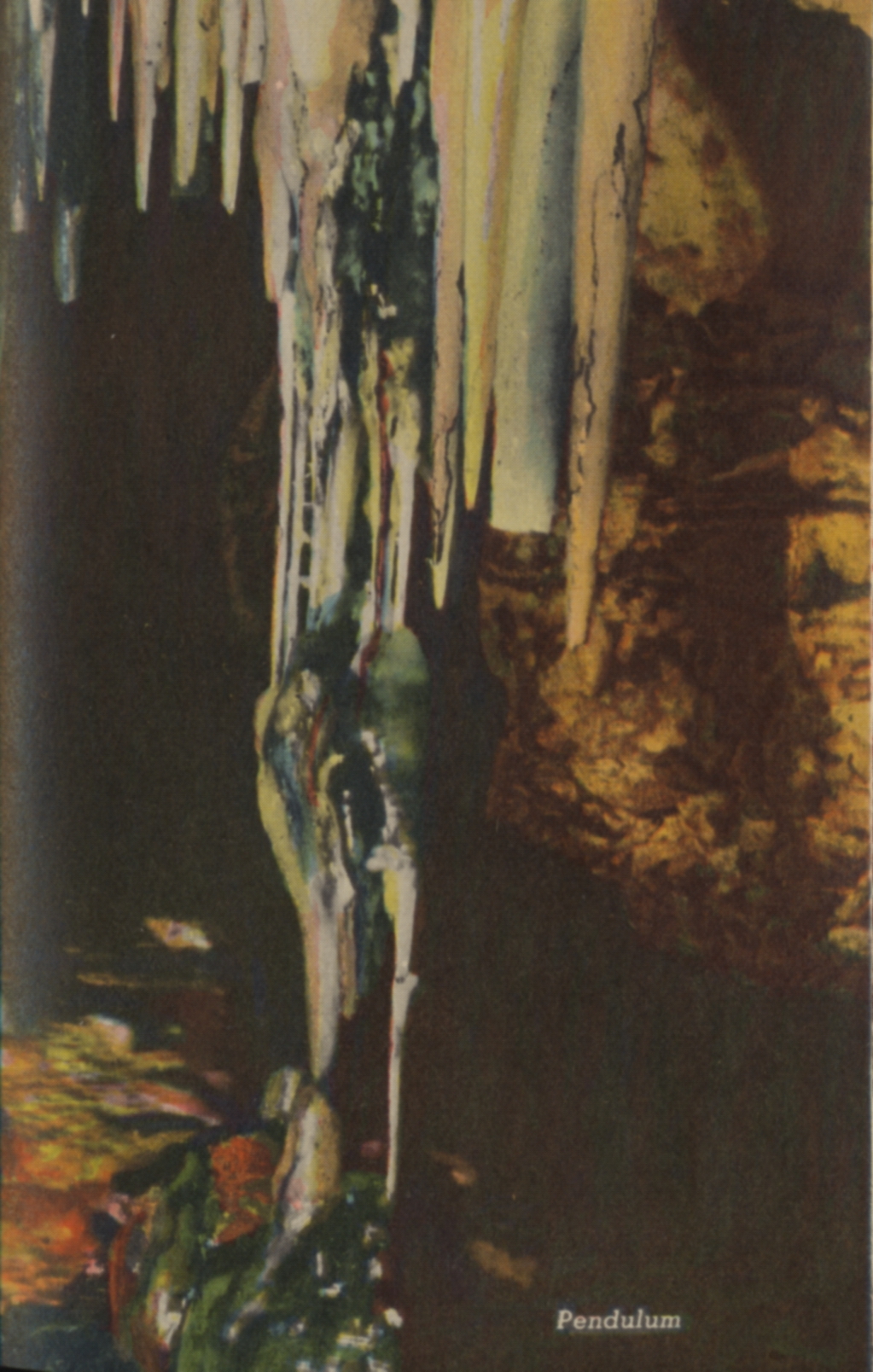
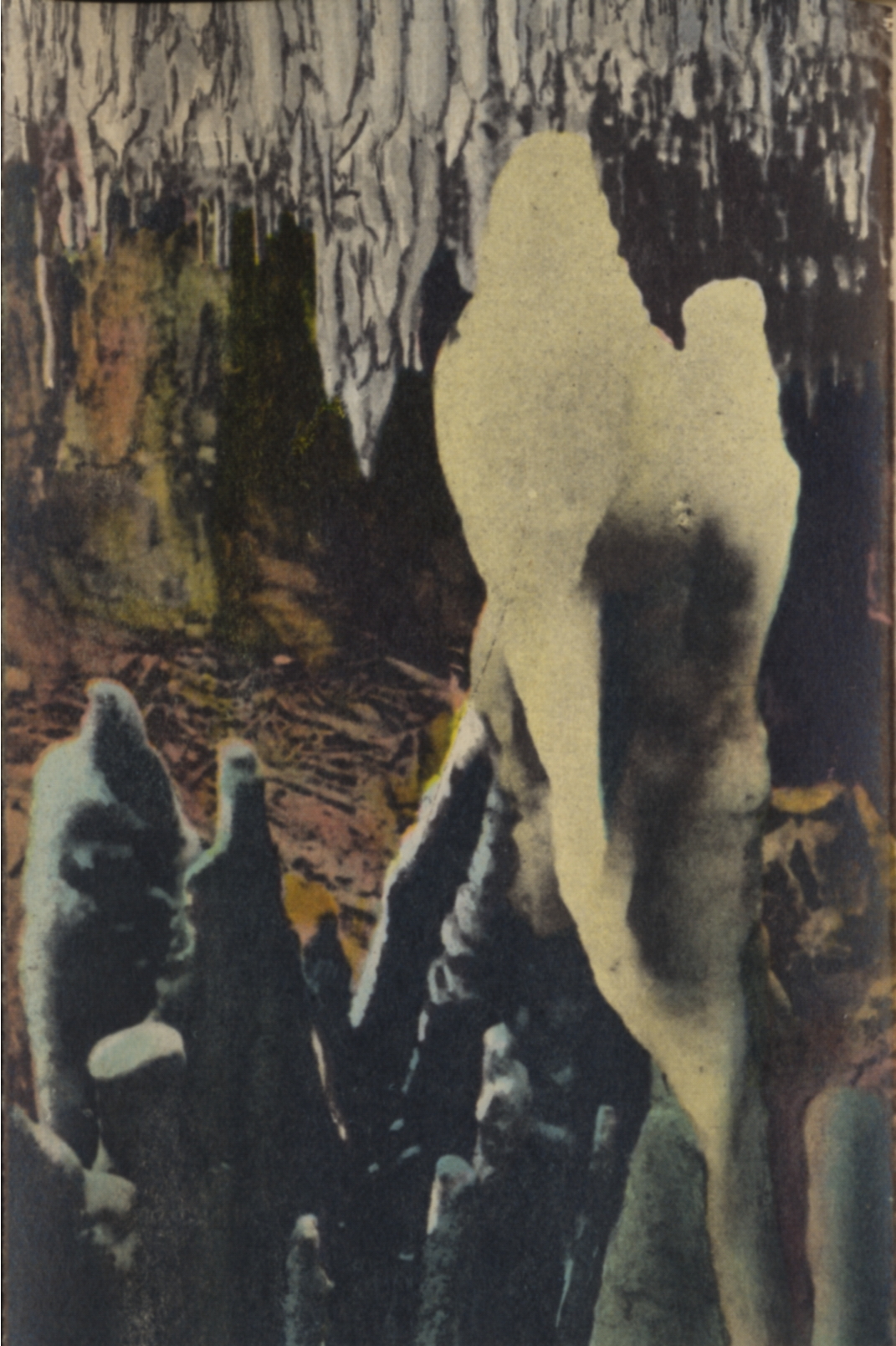
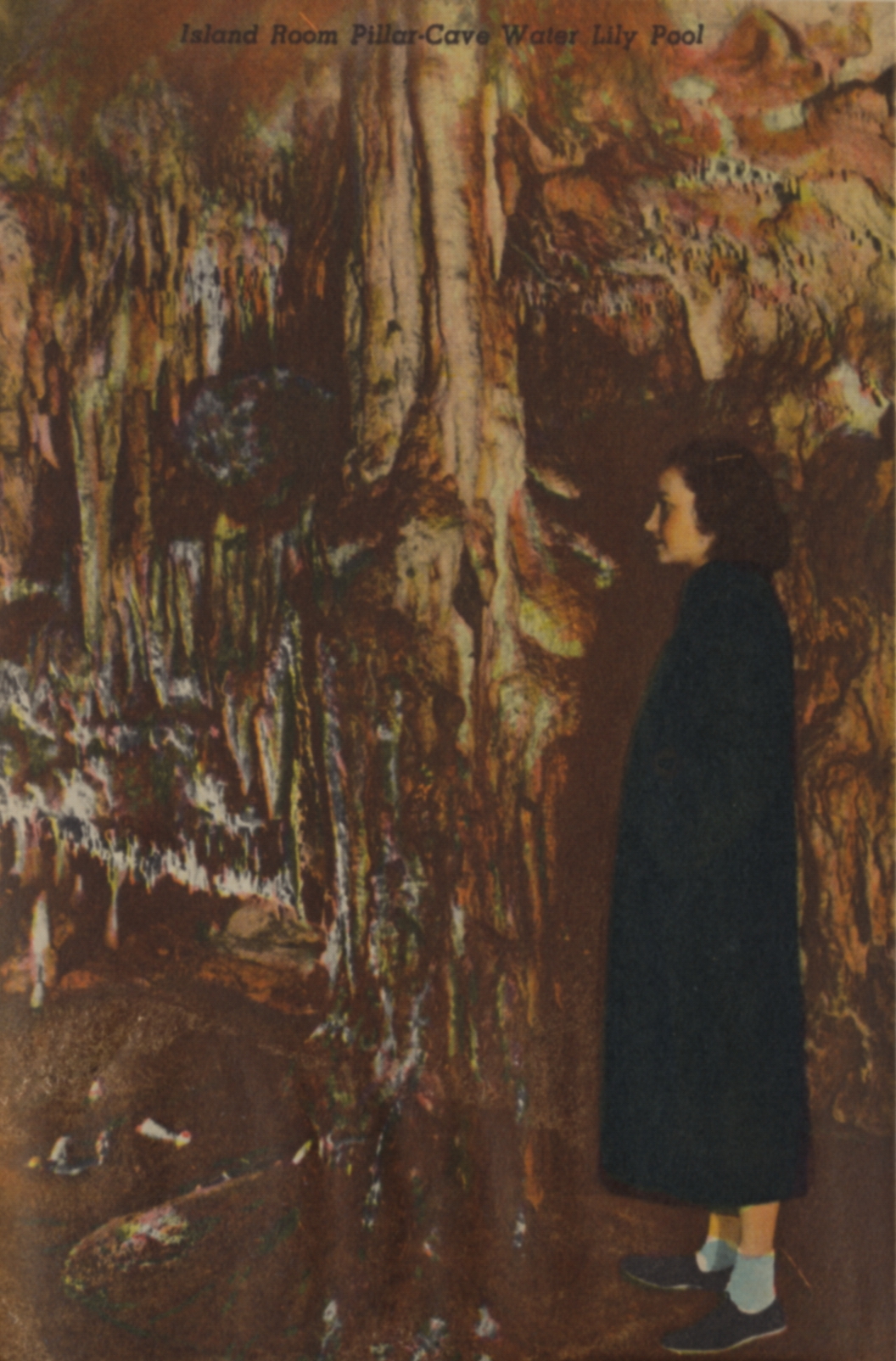
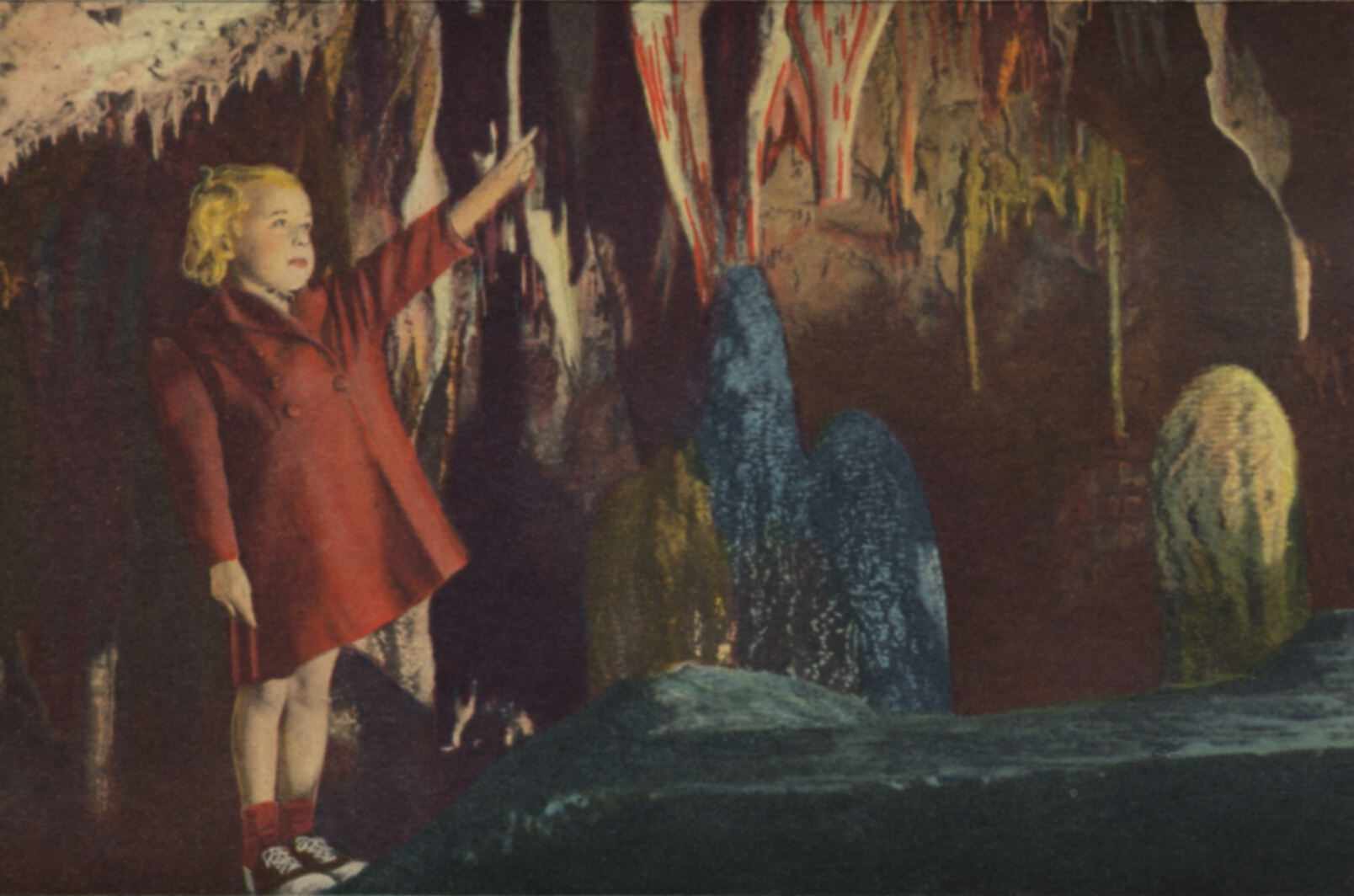
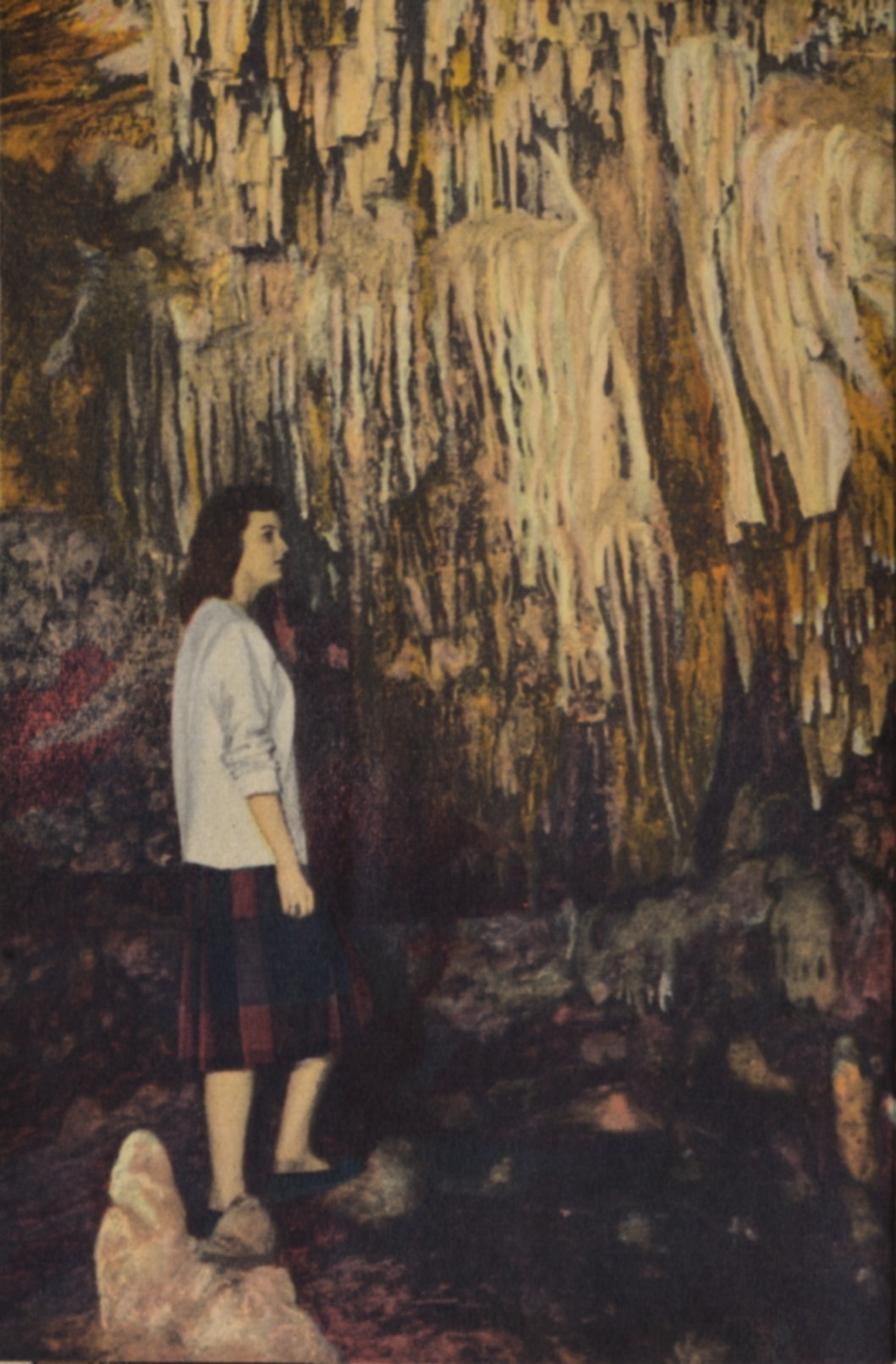
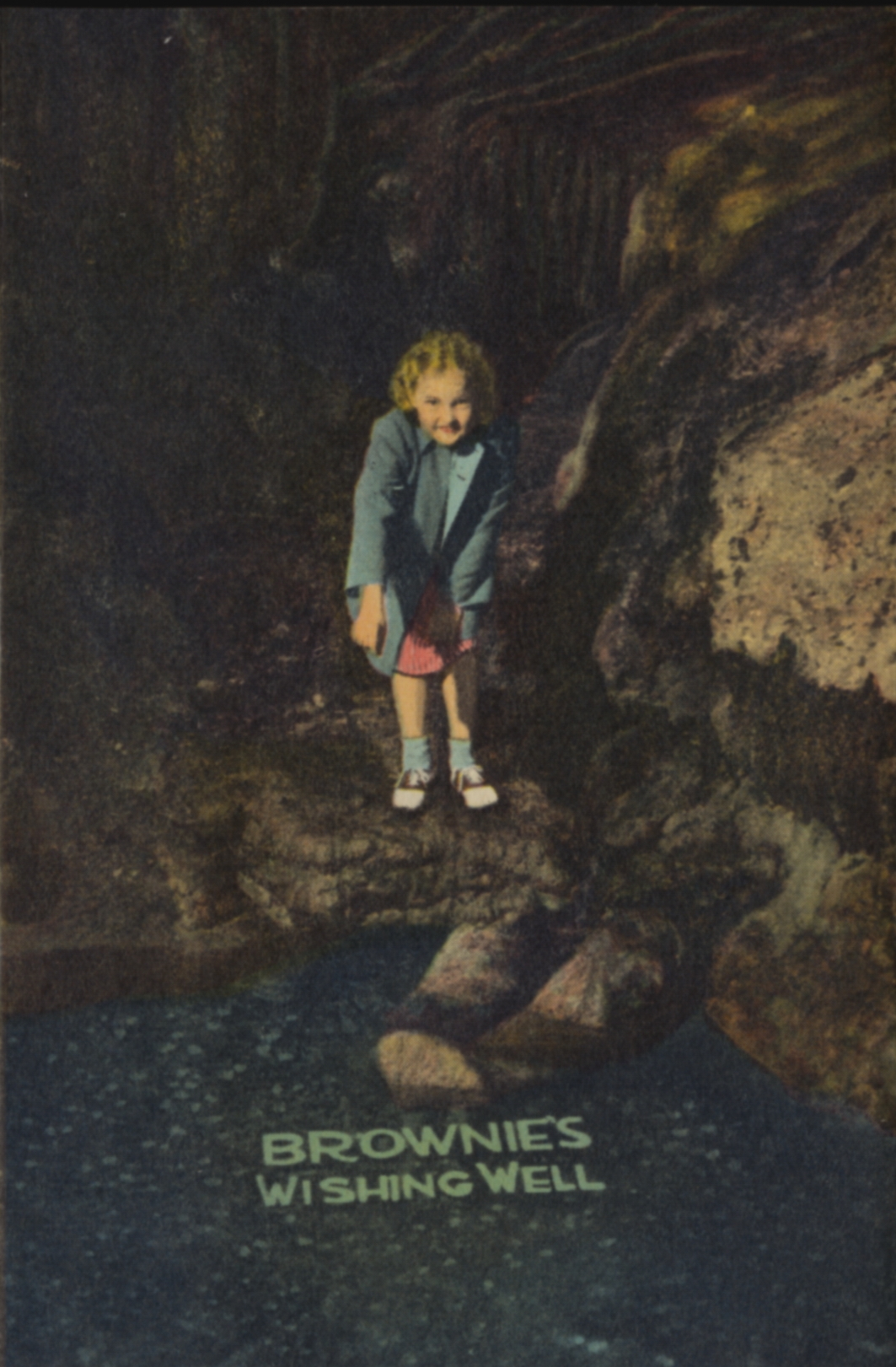
Several of the images above have legends to describe the locations, while others presumably allow your own imagination to identify the scene. A few can be identified from the images shown previously on this blog.
This folio was printed in 1951.
Dreamland Motel, Fish Creek, Wisconsin
Now a bit of a break from cave exploration with this image of the Dreamland Motel, located in Door County, Wisconsin, in the unincorporated village called Fish Creek.

The description is extensive, as is typical of motel postcards, which were intended as marketing materials:
Open year around
1-1/2 Miles from Ski Hill
DREAMLAND MOTEL, FISH CREEK, WISCONSIN
In Air-Conditioned Door County
Highway 42
12 Ultramodern heated units, with tile baths, sitting room, choice of one or two bedrooms, carpeting throughout. Located at the entrance to Peninsula State Park.
Mr. and Mrs. Andrew Seitz – Phone 2281
–The motel design far exceeds the norm for these days where a typical rental has a single modest room, a table or desk and chair, chest of drawers, a closet and a bathroom. This example is more like the suites we know now, but likely were priced much more modestly than suites are today, even accounting for inflation.
The car visible at the right side of the image indicates that this photo is from the 1950s.
Door County, Wisconsin
This folio features locations primarily associated with water in the Door County, Wisconsin area. This county is in the northeast corner of Wisconsin made up of a long, narrow peninsula extending into Lake Michigan.


These photos are a combination of candid photos and those, like the beach scene above, where the people in the foreground are clearly aware of the photographer, though not formally posed. Earlier in the collection, the photo at the cave looks almost like a family snapshot.
The images are readily dated from the legend on the front. This collection dates from the 1950s.
Castle and City, Heidelberg, Germany
This photo captures both the Renaissance castle ruins and the city of Heidelberg along the Neckar River below.

The only description on the back reads: Heidelberg – Schloß und Stadt. This translates directly as Heidelberg, Castle and City.
The poem on the front of the card translates as follows:
Old Heidelberg, you fine,
You city rich in honors,
On the Neckar and the Rhine,
No other comes right to you!
This card was used, and mailed from München, which allows it to be dated 22 June 1956.